← BACK TO DOSSIERS LIST
REALISM CASE FILE // TREND: THE UNCANNY VALLEY: WHY AI FACES LOOK LIKE CGI WAX FIGURES
Film-Style Reality Calibration: Reconstructing a Symmetrical Wax Showroom Dummy Beyond Default AI Aesthetics
DATE: 2026-07-12
STATUS: CALIBRATED_REALISM
ENGINE: CHATGPT DALL-E 3
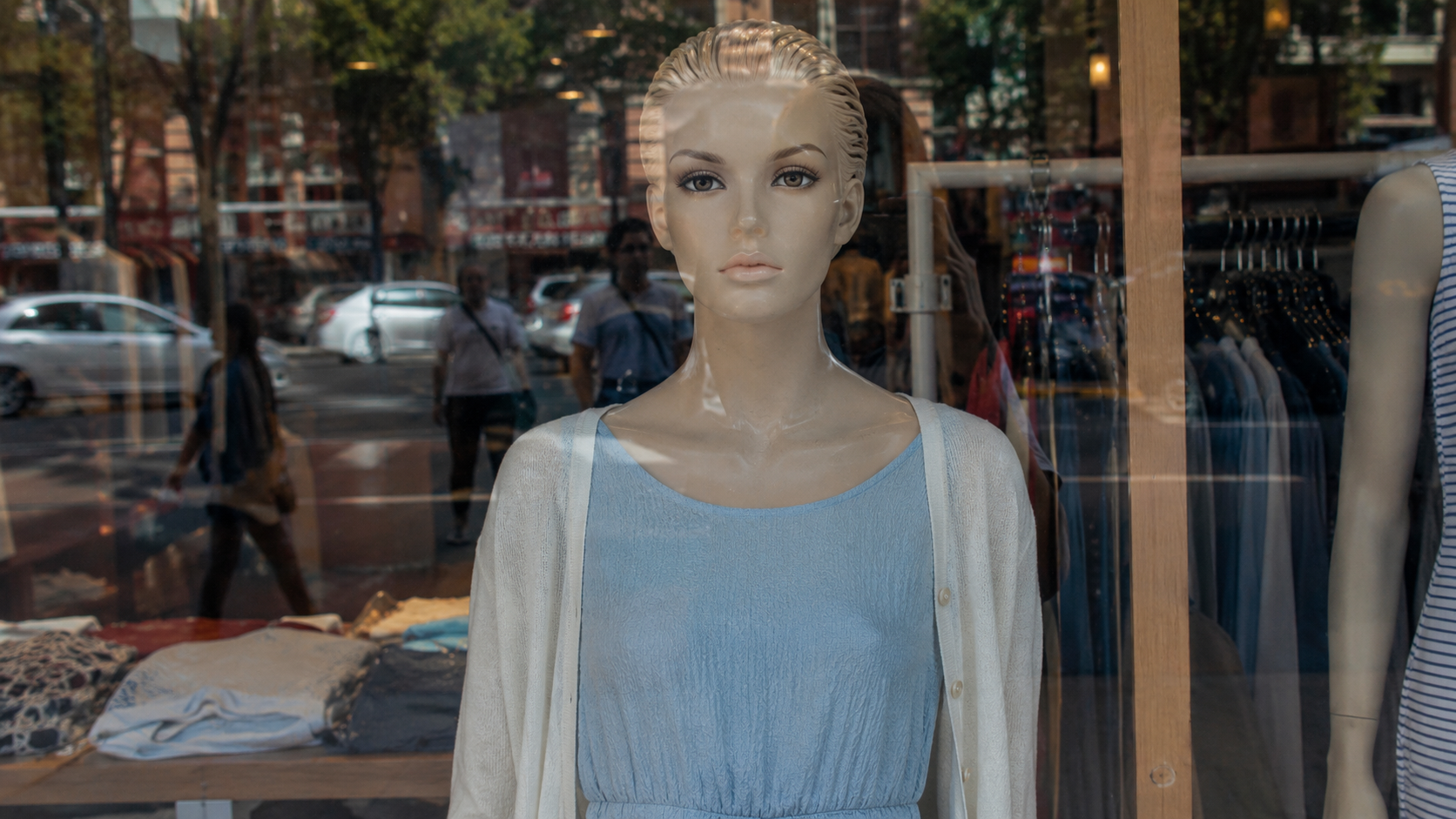
SPECIMEN IMAGE #16:9 - CLEAN OPTICS
Many AI-generated images of showroom dummies fall into the same repetitive pattern: exaggerated sharpness, flawless materials, sterile lighting, and unrealistic visual cleanliness. A real retail display behaves differently. Glass introduces reflections, lighting becomes uneven across surfaces, synthetic materials age subtly, and the interaction between the street and the storefront creates visual complexity that generic prompts often ignore.
To understand why believable simulation emerges from these details, we need to break the scene down into physical layers rather than aesthetic labels. The dummy itself, the retail environment, the optical behavior of the window, the signs of time, and the camera all contribute to realism. Yet the deeper advantage comes from language-level calibration. The true secret is not adding more detail but replacing abstract visual clichés with physically descriptive vocabulary, a process revealed in the calibration console through lexicon shifts.
Lexicon shifts convert idealized terms into observable phenomena. Instead of describing a subject as perfect, the calibration process identifies material behavior, reflection patterns, optical limitations, environmental interaction, and age-related variation. Technical calibration metrics focus on reflection density, highlight clipping behavior, texture retention, shadow distribution, material aging cues, sensor response, and lens limitations. These metrics create images that behave like photographs rather than illustrations.
This brings us back to the original problem: default AI aesthetics often prioritize visual optimization over observational truth. By learning to calibrate prompts through layered reality analysis and lexicon transformation, creators can generate imagery with stronger documentary credibility. For readers who want a complete framework for camera-grade realism engineering, the ALPHA REALISM methodology provides a structured approach to realism calibration, scene analysis, and prompt reconstruction. Explore the full system through ALPHA REALISM and apply these principles across retail photography, portrait simulation, and film-style visual design.
The 5 Layers of Reality Applied
Subject:
A waxy showroom dummy displayed behind a retail shop window, featuring highly symmetrical facial proportions, smooth molded skin-like surfaces, fixed neutral expression, artificial eyelashes, uniform hair placement, rigid posture, proportionally balanced limbs, synthetic clothing arranged for display, and subtle manufacturing seams visible under close inspection.
Environment:
Street-facing shop window with mixed daylight and interior retail illumination, soft shadow pooling around display fixtures, reflections from passing vehicles and pedestrians layered across the glass surface, uneven luminance between interior and exterior zones, and localized glare near high-contrast edges.
Physics:
Window glass generates layered reflections and partial transparency, gravity keeps garments hanging with predictable fold compression, dust accumulates along horizontal surfaces, reflected sunlight shifts across the display, and minor optical contamination softens highlights near the glass.
Time:
Light dust accumulation on the display base, faint surface wear on clothing folds, subtle discoloration from prolonged exposure to retail lighting, minor scuffs on shoes or stand components, and slight aging of synthetic materials visible through uneven sheen retention.
Camera:
Documentary-style capture using a consumer-grade full-frame or smartphone-equivalent camera, moderate focal length, slight edge softness, realistic reflection handling, natural sensor grain, mild compression artifacts, restrained dynamic range, and physically plausible highlight clipping on reflective surfaces.
The Lexicon Shift Table
| Appearance (Dead Adjective) |
|
Living Event (Cause & Effect) |
| perfect mannequin face |
➔ |
highly symmetrical molded facial structure with subtle manufacturing uniformity |
| cinematic lighting |
➔ |
mixed storefront illumination with daylight spill and uneven shadow distribution |
| flawless skin |
➔ |
smooth wax-like surface showing material sheen variation under window light |
| crystal-clear glass |
➔ |
shop window glass with layered reflections, glare, and localized contamination |
| ultra sharp detail |
➔ |
realistic detail retention with slight edge softness and optical limitations |
| perfect composition |
➔ |
observational framing influenced by retail architecture and street reflections |
Calibration Prompt Console
SUBJECT: A waxy showroom dummy displayed behind a retail shop window, highly symmetrical facial structure, smooth molded skin-like material, fixed neutral expression, artificial eyelashes, balanced body proportions, rigid display posture, synthetic retail clothing arranged naturally, visible manufacturing uniformity without beautification. ENVIRONMENT: Street-facing storefront with mixed daylight and indoor retail lighting, layered reflections of pedestrians and vehicles across the glass, uneven illumination zones, practical commercial fixtures, soft shadow accumulation, realistic glare behavior. PHYSICS: Window reflections interacting with transparency, gravity-driven clothing folds, subtle dust accumulation, reflected sunlight shifting across surfaces, physically plausible highlight clipping and material sheen variation. TIME: Mild retail wear, faint dust deposits, slight aging of synthetic materials, small scuffs on display elements, uneven exposure effects from long-term storefront lighting. CAMERA: Documentary photographic capture, consumer-grade optics, slight edge softness, realistic focus behavior, natural sensor grain, mild compression artifacts, restrained dynamic range, authentic reflection handling, observational realism, non-cinematic rendering, physically plausible optical limitations --ar 16:9
Do you want to generate precise AI images?
Unlock our alpha realism blueprint, physical reliable framework to get the best of your creations with the ALPHA REALISM Guide.
Download Ebook Now