← BACK TO DOSSIERS LIST
REALISM CASE FILE // TREND: LENS CALIBRATION SETTINGS FOR MACRO FOOD PHOTOGRAPHY PROMPTS
Camera-Grade Raspberry Macro Photography: A Five-Layer Reality Calibration for Authentic Surface Detail
DATE: 2026-06-28
STATUS: CALIBRATED_REALISM
ENGINE: CHATGPT DALL-E 3
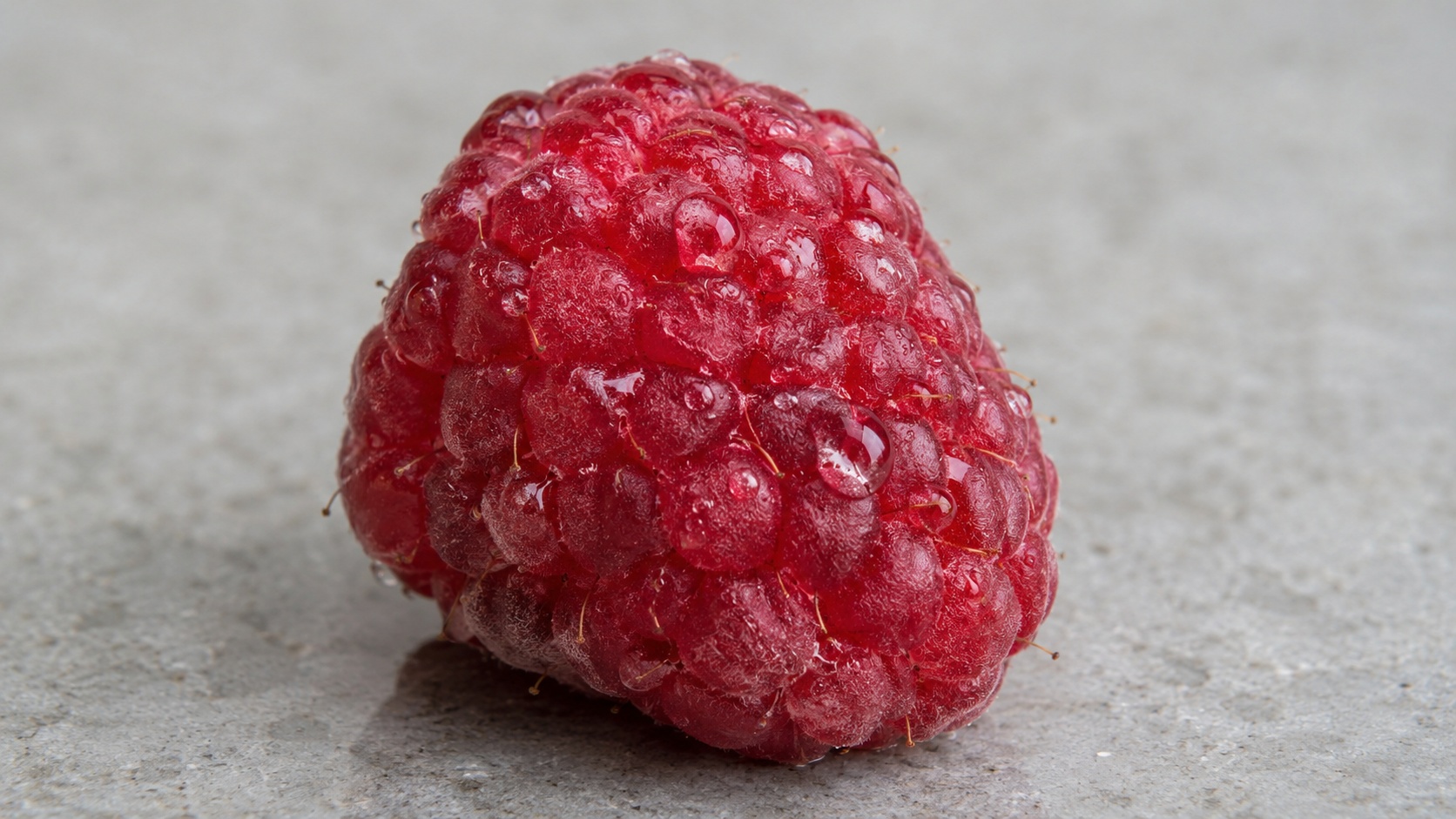
SPECIMEN IMAGE #16:9 - CLEAN OPTICS
Macro photography is often reduced to a predictable AI formula where every fruit becomes perfectly symmetrical, every droplet is identical, and every surface appears uniformly sharp. While visually impressive at first glance, these recurring patterns move further away from how a real camera records biological subjects under ordinary lighting conditions.
In this calibration we will break down the scene through five layers of reality, examining the subject, environment, physics, time and camera behavior that collectively produce believable macro imagery. However, the real breakthrough is not hidden inside camera settings alone. The language used to describe reality determines whether an image feels synthetic or observational, and the calibration console at the end of the dossier reveals the lexicon-level shifts that make the largest difference.
Replacing generalized aesthetic phrases with physically descriptive vocabulary changes how an image model interprets geometry, optics, moisture, texture and light interaction. Terms such as "perfect" or "ultra detailed" are replaced by measurable observations like gradual focus falloff, irregular droplet distribution, natural highlight rolloff and biological variation. These lexicon shifts function as calibration metrics that align generated imagery more closely with authentic photographic behavior.
Returning to the original question of why AI imagery often looks repetitive, the answer lies less in rendering quality than in language precision. When prompts describe observable physical behavior instead of idealized aesthetics, realism improves naturally. If you want to explore a complete calibration framework built around this methodology, the ALPHA REALISM guide expands these concepts into a structured workflow, and the ALPHA REALISM reference manual provides a practical system for building consistent camera-grade prompts.
The 5 Layers of Reality Applied
Subject:
A single ripe raspberry resting naturally with an irregular rounded structure composed of clustered drupelets, subtle size variation between individual cells, tiny fine hairs along the surface, naturally uneven pigmentation ranging from deep crimson to darker red, scattered water droplets of different diameters adhering through surface tension, slight natural imperfections including minor dents, soft edges, and localized texture variation without cosmetic perfection.
Environment:
Soft diffused daylight entering from a nearby window, neutral ambient illumination, gentle contact shadows beneath the fruit, muted background rendered as an out-of-focus kitchen or tabletop surface with subtle color variation, realistic brightness falloff, no dramatic studio lighting, no artificial spotlight, slight environmental reflections inside larger droplets.
Physics:
Surface tension maintains water droplets of varying sizes across the raspberry cells, gravity causes larger droplets to elongate slightly toward the lower side, microscopic reflections shift with droplet curvature, moisture increases localized surface gloss while adjacent areas remain matte, shallow depth of field causes gradual focus falloff across the fruit rather than uniform sharpness.
Time:
Freshly rinsed fruit showing transient moisture before evaporation, naturally occurring pigment variation, faint organic imperfections from harvesting and transport, no visible mold or decay, subtle signs of biological variability rather than manufactured symmetry.
Camera:
True macro photography using a 100mm macro lens at approximately f/8, ISO 200, 1/160s shutter speed, full-frame sensor, manual focus on the forward-facing drupelets, realistic optical falloff, natural diffraction limits, slight sensor grain in darker regions, restrained color rendering, accurate white balance, minimal sharpening, no HDR exaggeration.
The Lexicon Shift Table
| Appearance (Dead Adjective) |
|
Living Event (Cause & Effect) |
| ultra detailed macro |
➔ |
naturally resolved surface structure with gradual optical falloff |
| perfect water droplets |
➔ |
water droplets of uneven size formed through natural surface tension |
| hyper realistic texture |
➔ |
organic surface variation with localized microtexture differences |
| cinematic lighting |
➔ |
soft diffused daylight producing gentle ambient shadows |
| perfect composition |
➔ |
balanced observational framing with natural negative space |
| flawless fruit |
➔ |
ripe fruit showing minor dents, pigment variation and biological irregularity |
| HDR clarity |
➔ |
natural dynamic range preserving highlight rolloff |
| razor sharp everywhere |
➔ |
selective macro focus with gradual depth transition |
Calibration Prompt Console
5-Layer Camera-Grade Realism. Subject: a single ripe raspberry with naturally uneven drupelets, fine surface hairs, subtle pigment variation, scattered water droplets of irregular size, minor biological imperfections, organic surface texture without artificial enhancement. Environment: resting on a neutral tabletop under soft window daylight, muted out-of-focus background, gentle contact shadows, realistic reflected light inside droplets, no studio setup. Physics: visible surface tension, gravity influencing larger droplets, authentic moisture behavior, physically accurate reflections, gradual macro depth-of-field transition, realistic optical focus falloff. Time: freshly rinsed fruit before moisture evaporates, naturally occurring harvest marks, slight wear from handling, authentic freshness without idealization. Camera: full-frame camera, 100mm macro lens, f/8, ISO 200, 1/160 second, manual focus on front drupelets, restrained sharpening, realistic sensor grain, accurate color science, natural highlight rolloff, optical realism, documentary macro photography, no CGI look, no exaggerated HDR, no artificial glow, no oversaturated colors --ar 16:9
Do you want to generate precise AI images?
Unlock our alpha realism blueprint, physical reliable framework to get the best of your creations with the ALPHA REALISM Guide.
Download Ebook Now