← BACK TO DOSSIERS LIST
REALISM CASE FILE // TREND: WHY STANDARD PROMPT TEMPLATES ARE DESTROYING YOUR CREATIVITY
Photo-Realism Calibration: Photographing Generic Printed Template Sheets on an Office Desk
DATE: 2026-07-12
STATUS: CALIBRATED_REALISM
ENGINE: CHATGPT DALL-E 3
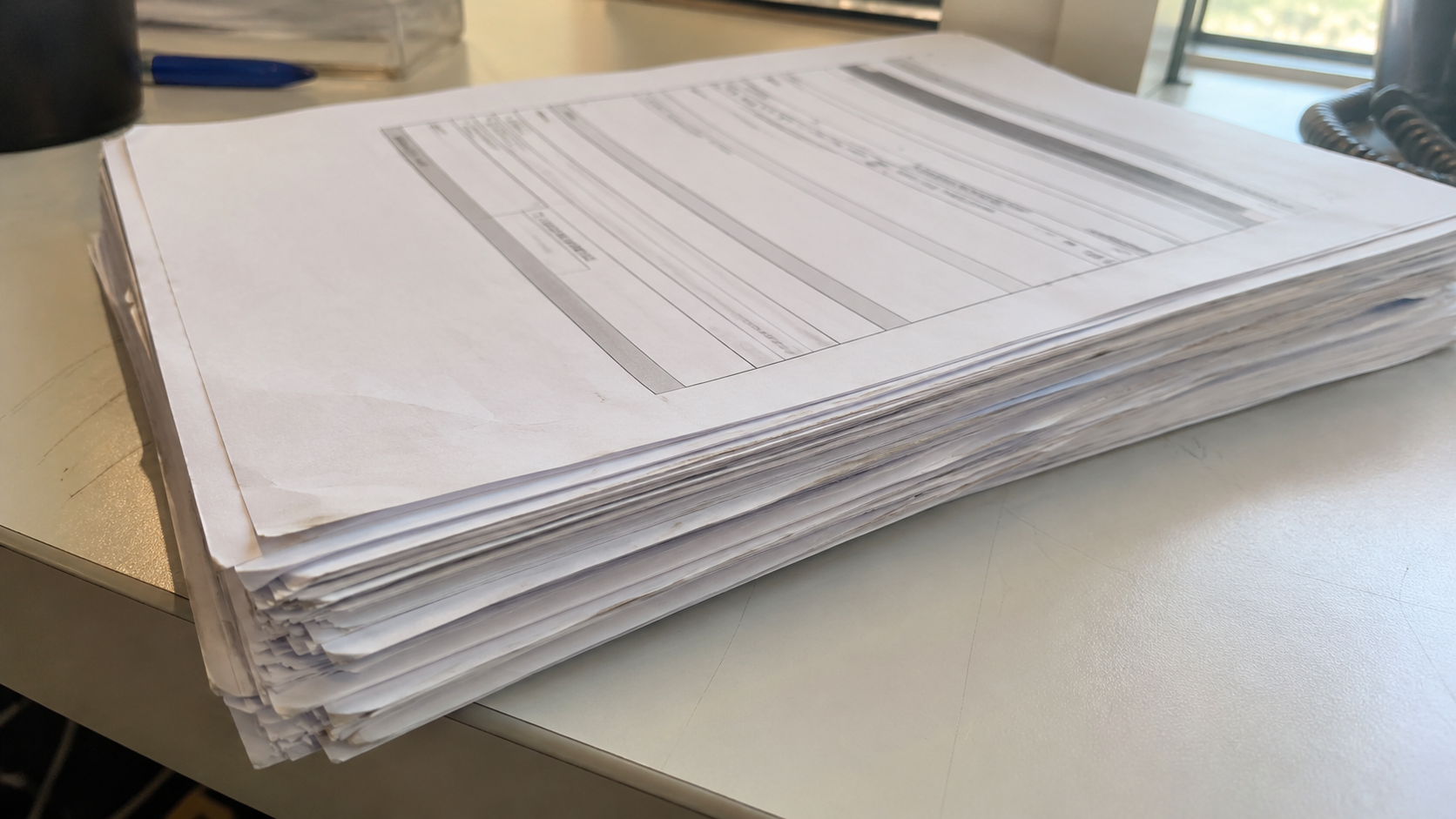
SPECIMEN IMAGE #16:9 - CLEAN OPTICS
Images of office paperwork are frequently generated with the same repetitive visual language: perfectly aligned sheets, flawless lighting, immaculate desks, and unrealistic sharpness. These defaults create a synthetic appearance that disconnects the image from how documents actually exist in a working environment. A stack of generic printed template sheets becomes more believable when physical imperfections, handling wear, and ordinary office conditions are allowed to remain visible.
In this calibration dossier, we will break down the subject through five layers of reality: Subject, Environment, Physics, Time, and Camera. These layers help reveal why ordinary scenes often fail when rendered through default AI aesthetics. Yet the deeper lesson extends beyond visual description. The true key to camera-grade simulation emerges from language-level shifts that alter how reality is encoded, a pattern that becomes fully visible in the calibration console at the end of the dossier.
Lexicon shifts replace abstract perfection with observable physical behavior. Instead of describing a pristine desk, we describe faint scratches, dust accumulation, and signs of use. Instead of a perfectly organized stack, we describe page displacement caused by gravity and handling. Technical calibration metrics also move away from idealized optics, introducing edge softness, HDR flattening, limited dynamic range, and realistic focus behavior. These adjustments produce images that resemble ordinary photographic evidence rather than polished marketing material.
Returning to the original problem, realism is rarely achieved by adding more detail. It emerges from believable information loss, material wear, environmental asymmetry, and ordinary camera limitations. Creators seeking a deeper framework for photo-realism can continue their study through ALPHA REALISM, where calibration methodologies are explored in greater depth. For advanced realism workflows, reconstruction logic, and lexicon engineering techniques, the ALPHA REALISM Guide provides a structured system for transforming generic prompts into observationally credible imagery.
The 5 Layers of Reality Applied
Subject:
A close-up view of a stack of generic printed template sheets resting on an office desk. The paper edges show slight misalignment from repeated handling, with subtle curl variation and minor compression marks. Printed grids, placeholder fields, and generic form structures are visible without branding. The stack is uneven rather than perfectly squared, with localized shadowing between layers.
Environment:
An ordinary office workspace with practical ambient illumination from a nearby window mixed with overhead office lighting. Soft shadows accumulate beneath the paper stack and around nearby desk objects. The desk surface shows minor dust accumulation, faint scratches, and small signs of daily use. Background office elements remain partially visible and slightly out of focus.
Physics:
Gravity compresses the lower sheets while upper pages exhibit slight edge lift and natural paper waviness. Reflected light scatters unevenly across the paper surface, producing mild brightness variation. Thin shadows form within page separations, while friction between sheets creates irregular stacking behavior. No artificial symmetry or perfectly aligned geometry is present.
Time:
The documents display subtle handling wear, including softened corners, minor edge discoloration, light creasing, and faint toner inconsistencies. The desk surface contains small dust particles and signs of repeated use. The scene conveys an actively used office environment rather than a staged presentation setup.
Camera:
Close-range documentary capture using a consumer smartphone camera equivalent to a 26mm lens. Slight edge softness, moderate computational sharpening, mild HDR flattening, limited dynamic range, subtle sensor noise in shadow regions, and realistic focus falloff toward frame edges. Natural optical imperfections remain visible without cinematic processing.
The Lexicon Shift Table
| Appearance (Dead Adjective) |
|
Living Event (Cause & Effect) |
| perfectly organized paperwork |
➔ |
slightly misaligned printed sheets showing natural handling variation |
| pristine office desk |
➔ |
desk surface with faint scratches, dust particles, and everyday wear |
| studio lighting |
➔ |
mixed window light and overhead office illumination with uneven shadow distribution |
| ultra sharp details |
➔ |
localized sharpness with realistic edge softness and focus falloff |
| professional commercial photography |
➔ |
observational office documentation with ordinary camera behavior |
| clean geometric stack |
➔ |
paper stack affected by gravity, friction, and slight page displacement |
Calibration Prompt Console
SUBJECT: close-up of a stack of generic printed template sheets lying on an ordinary office desk, visible form fields and placeholder layouts, slight page misalignment, softened corners, minor handling creases, subtle toner variation, no branding, realistic paper texture, observational office documentation. ENVIRONMENT: practical office workspace, mixed daylight from a nearby window and overhead office lighting, faint desk scratches, dust particles, partially visible office objects in the background, uncontrolled environmental detail, non-staged composition. PHYSICS: gravity-compressed paper stack, slight page curl, uneven edge spacing, realistic shadow accumulation between sheets, natural light reflections on paper fibers, friction-driven stacking irregularities. TIME: signs of daily use, mild corner wear, subtle discoloration on paper edges, realistic office fatigue, accumulated dust, ordinary workplace aging. CAMERA: consumer smartphone close-up capture, 26mm equivalent lens, mild HDR flattening, slight edge softness, realistic focus falloff, limited dynamic range, subtle shadow noise, computational sharpening artifacts, documentary realism, non-cinematic optics, authentic office photography --ar 16:9
Do you want to generate precise AI images?
Unlock our alpha realism blueprint, physical reliable framework to get the best of your creations with the ALPHA REALISM Guide.
Download Ebook Now