← BACK TO DOSSIERS LIST
REALISM CASE FILE // TREND: HOW TO PROMPT NATURAL LIGHTING IN AI IMAGES WITHOUT CINEMATIC HYPE
Film-Style Morning Light Realism: Calibrating an Empty Wooden Chair Scene Beyond Generic AI Aesthetics
DATE: 2026-07-25
STATUS: CALIBRATED_REALISM
ENGINE: CHATGPT DALL-E 3
SPECIMEN IMAGE #16:9 - CLEAN OPTICS
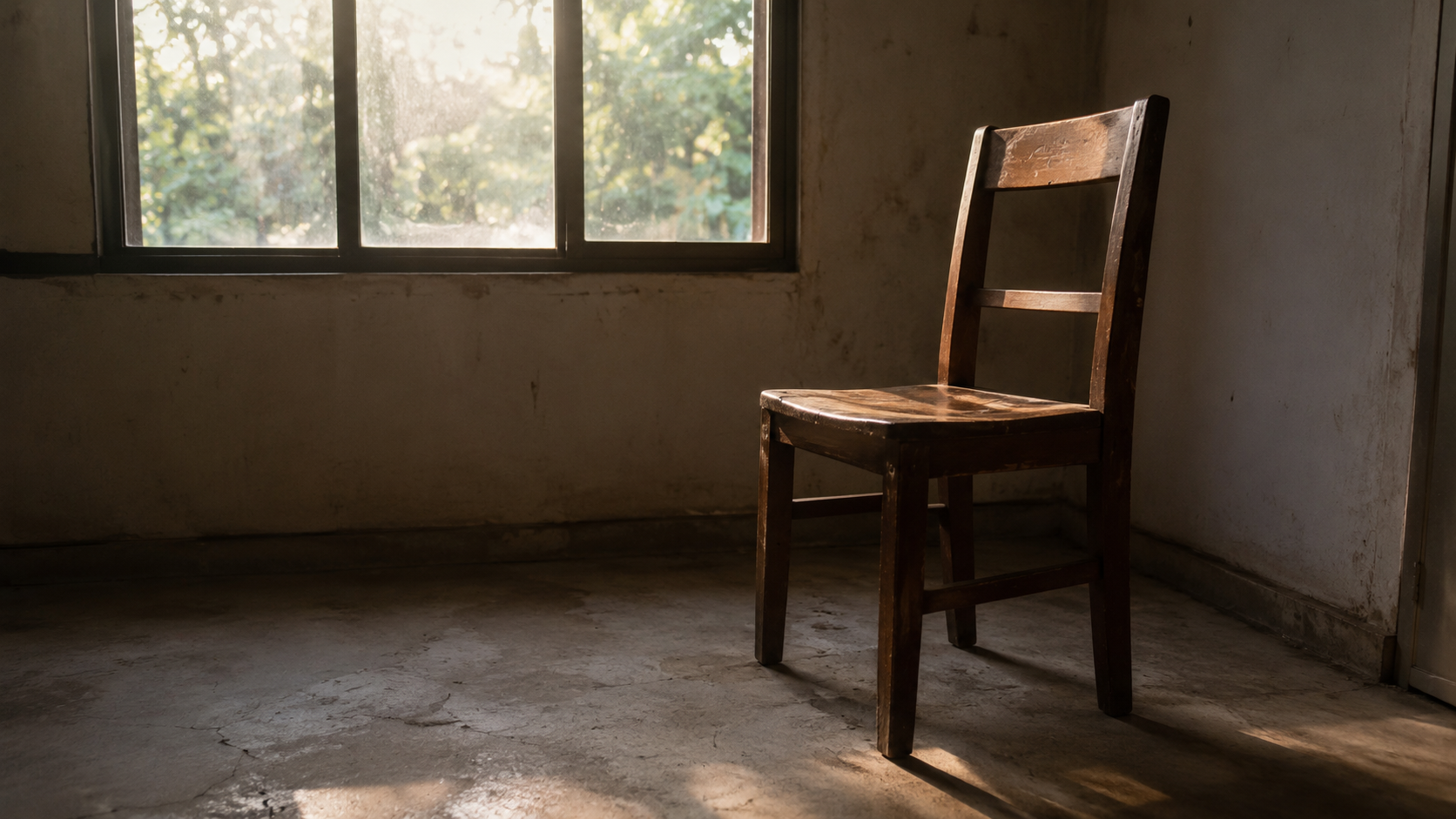
Many AI-generated interiors fall into a familiar visual pattern: immaculate furniture, perfectly controlled lighting, flawless surfaces, and cinematic styling that rarely resembles how real spaces are actually photographed. An empty wooden chair near a window appears simple, yet realism emerges from subtle imperfections, material fatigue, uneven illumination, and the ordinary physical behavior of light interacting with aging surfaces.
To understand why this scene feels believable, we need to break down the physical layers hidden beneath the image. The chair, floor, window light, atmospheric diffusion, and camera behavior all contribute to realism. However, the true secret behind camera-grade simulation is not merely adding more detail. It is the language-level calibration process that changes how the scene is described. The calibration console at the end of the dossier reveals these lexicon shifts and explains why certain words consistently produce more authentic results.
Lexicon shifts operate as realism controls. Terms such as "masterpiece," "ultra sharp," or "cinematic lighting" often push image generation toward stylized outputs. Replacing them with physically grounded descriptions like material wear, observational lighting behavior, optical falloff, and environmental aging improves realism fidelity. Calibration metrics should prioritize environmental entropy, physical plausibility, material fatigue, shadow coherence, realistic exposure behavior, and restrained sensor performance rather than aesthetic optimization.
Returning to the original chair scene, the difference between a generic AI image and a convincing photograph is rarely the object itself. It is the accumulation of believable physical evidence surrounding that object. This is the foundation explored throughout the ALPHA REALISM framework. For creators seeking deeper control over realism calibration, film-style prompt engineering, and camera-grade visual simulation, the ALPHA REALISM Guide provides a structured methodology for transforming synthetic aesthetics into physically credible imagery.
The 5 Layers of Reality Applied
Subject:
An empty wooden chair with visible wear on armrests and seat edges, positioned beside a window. The chair remains the primary subject without decorative additions, showing ordinary material aging, minor scratches, uneven varnish wear, and subtle dust accumulation in corners and joints.
Environment:
Soft morning sunlight enters through the window at a low angle, creating elongated shadows across a slightly worn concrete floor. The room feels practical rather than staged, with uneven light distribution, mild highlight clipping near the window frame, gradual shadow falloff, and subtle ambient bounce light reflecting from nearby surfaces.
Physics:
Gravity defines the chair's contact with the floor and the natural direction of the shadows. Sunlight reflects weakly from the concrete surface, while airborne dust slightly diffuses brighter regions near the window. Shadow edges remain soft due to indirect atmospheric scattering rather than artificial lighting control.
Time:
The scene contains signs of everyday aging: small surface abrasions in the wood, faint discoloration from repeated use, accumulated dust in less-accessible areas, slight floor staining, and subtle material fatigue consistent with a lived-in interior exposed to years of natural light.
Camera:
Documentary-style capture using a 35mm equivalent focal length, handheld observational framing, realistic lens softness near frame edges, slight sensor grain in shadow regions, moderate dynamic range, mild compression artifacts, natural exposure rolloff, and authentic detail retention without artificial sharpening.
The Lexicon Shift Table
| Appearance (Dead Adjective) |
|
Living Event (Cause & Effect) |
| perfectly crafted wooden chair |
➔ |
wooden chair showing subtle wear, scratches, and uneven varnish aging |
| cinematic lighting |
➔ |
low-angle morning sunlight creating naturally scattered illumination |
| pristine concrete floor |
➔ |
concrete floor with faint stains, texture variation, and accumulated use marks |
| ultra sharp details |
➔ |
realistic detail retention with slight edge softness and optical falloff |
| masterpiece interior |
➔ |
ordinary lived-in room with practical spatial organization |
| dramatic shadows |
➔ |
elongated shadows shaped by the sun's low morning angle |
Calibration Prompt Console
SUBJECT: An empty wooden chair positioned beside a window, preserving ordinary furniture proportions, visible seat wear, minor scratches, uneven varnish fading, subtle dust accumulation, realistic material aging, no decorative styling. ENVIRONMENT: Practical interior space with a concrete floor, low-angle morning sunlight entering through the window, long naturally formed shadows, mild highlight clipping near the window, uneven ambient bounce light, observational documentary realism, non-curated room behavior. PHYSICS: Gravity-driven shadow projection, physically plausible light falloff, weak floor reflections, subtle airborne dust diffusion, realistic luminance transitions, authentic sunlight directionality. TIME: Signs of prolonged use including worn wood edges, faint discoloration, accumulated dust, small abrasions, concrete surface fatigue, material aging without restoration. CAMERA: Documentary photography, 35mm equivalent lens, handheld framing, realistic edge softness, moderate dynamic range, slight sensor grain in shadows, mild compression artifacts, natural exposure rolloff, authentic optical imperfections, non-cinematic rendering, observational realism --ar 16:9
Do you want to generate precise AI images?
Unlock our alpha realism blueprint, physical reliable framework to get the best of your creations with the ALPHA REALISM Guide.
Download Ebook Now