← BACK TO DOSSIERS LIST
REALISM CASE FILE // TREND: CALIBRATING HASSELBLAD LOOK IN AI PROMPTS FOR LUXURY PRODUCTS
Camera-Grade Realism for Luxury Perfume Photography: A Film-Style Calibration Guide Beyond Generic AI Aesthetics
DATE: 2026-07-03
STATUS: CALIBRATED_REALISM
ENGINE: CHATGPT DALL-E 3
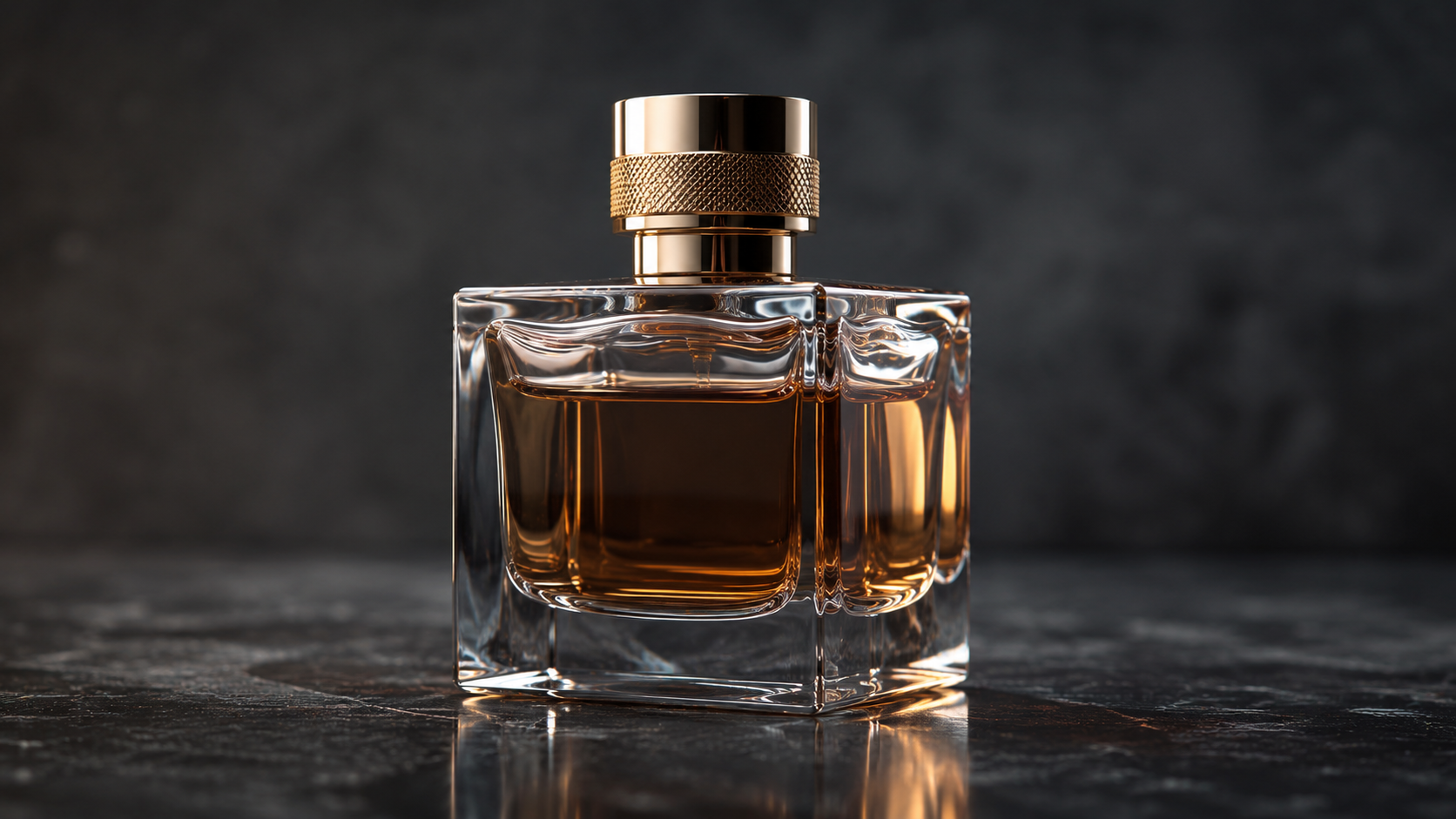
SPECIMEN IMAGE #16:9 - CLEAN OPTICS
Luxury product photography often becomes trapped inside repetitive AI aesthetics: immaculate glass, exaggerated reflections, impossible contrast, and surfaces that feel digitally manufactured instead of physically photographed. A convincing perfume image is not defined by visual intensity but by how faithfully light, materials, and optics behave together under real photographic conditions.
In the breakdown below we examine each physical layer separately, from subject construction through environmental interaction, material physics, temporal evidence, and camera behavior. Yet the real turning point does not come from adding more descriptive words. It comes from replacing generic visual vocabulary with language that describes measurable physical behavior. That shift becomes visible inside the calibration console at the end of the dossier, where seemingly small lexical substitutions produce substantially more believable camera-grade simulations.
The lexicon shifts replace abstract aesthetic instructions with physically observable phenomena. Expressions such as "cinematic lighting" become descriptions of side-key illumination, highlight rolloff, and restrained reflected fill. "Perfect reflections" become reflections interrupted by microscopic dust and surface variation. This calibration aligns prompts with optics, material science, sensor behavior, and exposure mechanics instead of visual clichés, allowing image generation models to produce results that resemble photographic capture rather than synthetic illustration.
Returning to the original problem, realism emerges when language models are instructed to simulate physical evidence instead of aesthetic ideals. If you want a deeper framework for building prompts through layered calibration, film-style observation, and systematic lexicon refinement, explore ALPHA REALISM. The complete methodology inside ALPHA REALISM expands these calibration principles into a repeatable workflow for creating camera-grade imagery with consistent physical plausibility.
The 5 Layers of Reality Applied
Subject:
A premium glass perfume bottle with a weighted transparent body, a precisely machined metallic cap, crisp engraved branding, realistic glass thickness, faint manufacturing tolerances, tiny dust particles, subtle fingerprints near the base, and naturally varying edge reflections without artificial perfection.
Environment:
The bottle rests on a dark polished stone slab with realistic micro-scratches, shallow surface dust, faint water marks, and physically plausible reflections. A controlled side key light creates gradual shadow falloff, restrained specular highlights, subtle bounce illumination, and a dark background that retains low-level texture instead of becoming featureless black.
Physics:
Gravity anchors the bottle naturally to the stone surface through realistic contact shadows. Fresnel reflections vary with viewing angle, glass refraction bends the background accurately, metallic highlights roll off naturally, microscopic dust interrupts perfect reflections, and slight environmental haze softens distant contrast without reducing object definition.
Time:
Minor cleaning streaks remain visible under grazing light, the stone exhibits accumulated micro-abrasion, the bottle edges show subtle handling traces, airborne dust settles unevenly, and material aging appears physically plausible rather than artificially distressed.
Camera:
Simulated full-frame mirrorless camera, 85mm macro lens, f/8, ISO 100, 1/125 second, tripod-mounted, native optical rendering, realistic diffraction limits, gentle lens vignetting, restrained sensor grain in shadow regions, physically accurate highlight rolloff, high dynamic range without HDR flattening, neutral color science, no synthetic sharpening.
The Lexicon Shift Table
| Appearance (Dead Adjective) |
|
Living Event (Cause & Effect) |
| dramatic cinematic lighting |
➔ |
controlled side key light with physically plausible highlight rolloff and restrained reflected fill |
| perfect reflections |
➔ |
slightly interrupted reflections shaped by microscopic dust and surface imperfections |
| ultra sharp product |
➔ |
optically resolved subject limited by real lens performance and diffraction |
| flawless glass |
➔ |
glass exhibiting faint manufacturing tolerances and subtle handling residue |
| luxury background |
➔ |
dark polished stone with realistic abrasion, micro-scratches, and uneven reflectivity |
| cinematic contrast |
➔ |
measured tonal separation preserving realistic shadow detail and highlight transitions |
Calibration Prompt Console
Layer 1 — Subject: A premium perfume bottle with thick transparent glass, accurately machined metallic cap, engraved branding, realistic glass thickness, subtle fingerprints near the base, microscopic dust particles, restrained manufacturing imperfections, physically believable proportions. Layer 2 — Environment: Positioned on a dark reflective polished stone surface containing micro-scratches, faint cleaning streaks, slight dust accumulation, naturally uneven reflectivity, deep neutral background retaining faint environmental texture. Layer 3 — Physics: Physically correct Fresnel reflections, accurate refraction through glass, realistic contact shadow, gradual side-key illumination, restrained bounce light, natural highlight clipping, believable material interaction, subtle airborne haze. Layer 4 — Time: Light evidence of careful handling, minor abrasion on the stone, faint dust settling, realistic material aging without exaggerated weathering. Layer 5 — Camera: Full-frame mirrorless camera, 85mm macro lens, f/8, ISO 100, 1/125 second, tripod stabilized, neutral color profile, natural optical contrast, realistic lens rendering, gentle vignetting, minimal sensor grain, physically accurate dynamic range, no artificial HDR look, no CGI appearance, no excessive sharpening, no stylized grading --ar 16:9
Do you want to generate precise AI images?
Unlock our alpha realism blueprint, physical reliable framework to get the best of your creations with the ALPHA REALISM Guide.
Download Ebook Now