← BACK TO DOSSIERS LIST
REALISM CASE FILE // TREND: LEICA M10 CALIBRATION SETTINGS FOR MIDJOURNEY AND CHATGPT
Camera-Grade Portrait Realism: Film-Style Calibration of Micro-Contrast, Organic Sharpness, and Natural Color
DATE: 2026-07-01
STATUS: CALIBRATED_REALISM
ENGINE: CHATGPT DALL-E 3
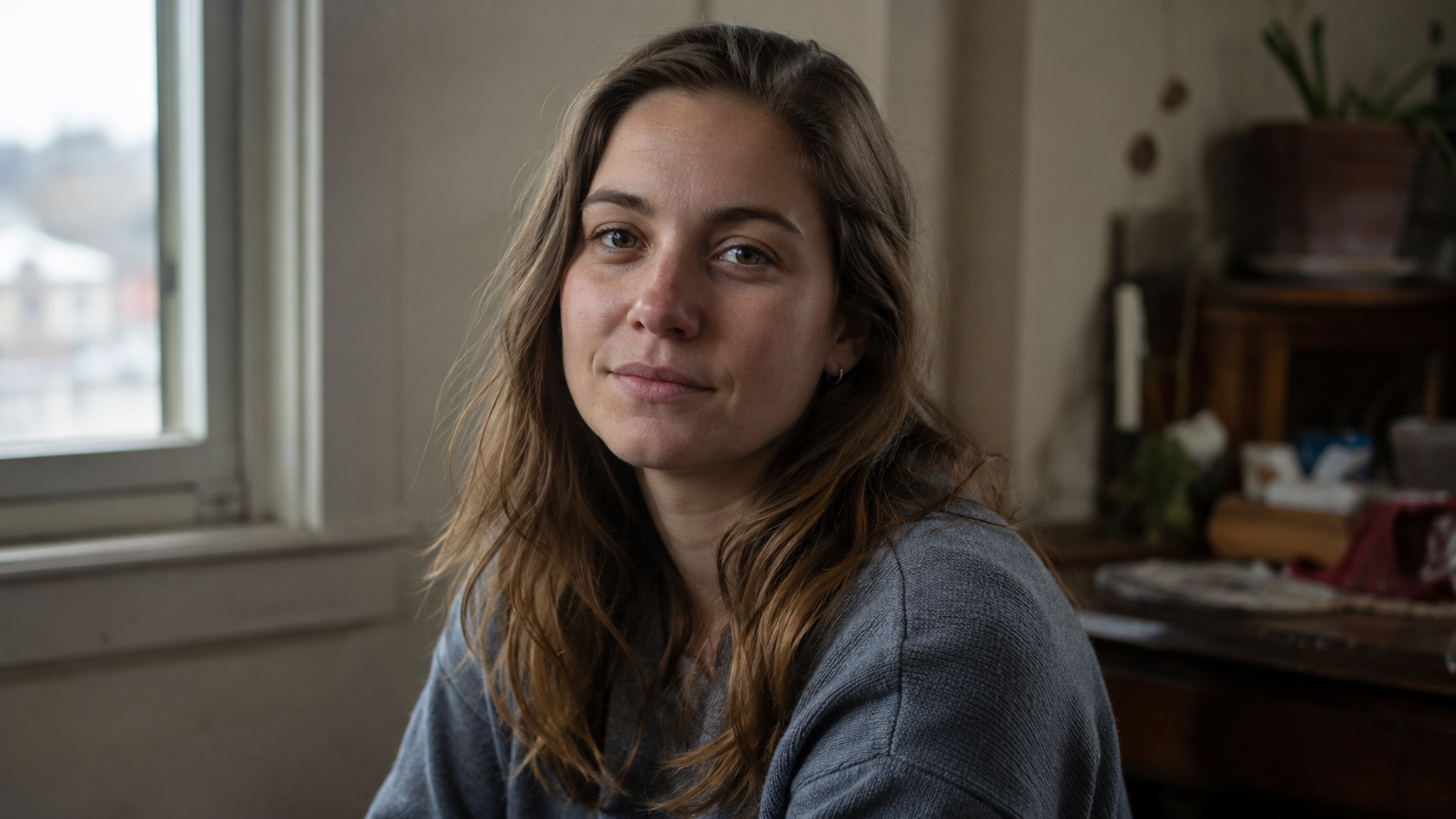
SPECIMEN IMAGE #16:9 - CLEAN OPTICS
Many AI-generated portraits immediately reveal themselves through repetitive visual habits: polished skin, exaggerated clarity, uniform lighting, and color that feels detached from physical reality. Camera-grade realism begins by rejecting those shortcuts. Instead of asking for more detail, the objective is to reproduce how real cameras distribute information, preserving both what remains visible and what naturally disappears through optics, lighting, and sensor behavior.
To understand why some portraits feel genuinely photographic while others resemble synthetic renderings, we first need to examine the physical layers that govern image formation. Those layers explain how subjects, environments, physics, time, and cameras interact. Yet the deeper breakthrough comes from language itself. The calibration console at the end of the dossier reveals that realism improves not by adding dramatic adjectives, but by replacing artificial vocabulary with physically descriptive terminology through carefully designed lexicon shifts.
A film-style calibration evaluates micro-contrast distribution, highlight roll-off, color response, optical transitions, texture retention, edge behavior, and sensor noise as interconnected systems rather than isolated effects. Lexicon shifts transform abstract phrases such as "perfect skin" into measurable visual behavior like visible pores under diffused daylight, or replace "cinematic lighting" with physically plausible ambient illumination. This vocabulary grounds image generation in observable optics instead of aesthetic clichés, resulting in portraits that resemble authentic camera captures rather than idealized illustrations.
Returning to the original challenge, believable portrait realism emerges from physical consistency instead of visual perfection. Every calibration layer reinforces that principle, while every lexicon shift reduces synthetic bias in the prompt itself. For creators seeking a deeper methodology, the ALPHA REALISM framework expands these film-style calibration principles into a complete reference system, and the ALPHA REALISM Guide provides a structured workflow for producing camera-grade realism through language rather than artificial embellishment.
The 5 Layers of Reality Applied
Subject:
A single person photographed with a relaxed expression, natural facial asymmetry, visible skin texture with subtle pores, slight tonal variation across the face, ordinary grooming, realistic hair strand separation with a few flyaway hairs, naturally resting shoulders, clothing showing authentic fabric folds without fashion styling, preserving structural identity instead of idealized appearance.
Environment:
Soft daylight entering through a nearby window creates uneven illumination with gentle shadow falloff, mild highlight clipping on brighter surfaces, natural ambient bounce light, slightly darker corners, ordinary indoor surroundings with subtle visual clutter, physically believable shadow transitions, and no stylized lighting design.
Physics:
Light follows realistic inverse falloff, gravity shapes garment folds and posture, small facial movements create uneven muscle tension, minor reflections appear on skin according to oil distribution, hair responds subtly to humidity and gravity, and material surfaces retain physically plausible micro-variation instead of uniform texture.
Time:
Subtle evidence of daily use including faint fabric wear, minor wrinkle accumulation, slight skin fatigue beneath the eyes, gentle color variation from normal circulation, natural dust accumulation on surrounding objects, and ordinary environmental aging without exaggerated distress.
Camera:
Full-frame digital camera simulation using an 85mm prime lens at approximately f/2.8, natural optical micro-contrast, moderate depth of field, realistic lens falloff, subtle sensor grain, gentle luminance noise, accurate highlight roll-off, restrained sharpening, mild chromatic aberration near high-contrast edges, realistic color response, and organic edge softness without artificial clarity enhancement.
The Lexicon Shift Table
| Appearance (Dead Adjective) |
|
Living Event (Cause & Effect) |
| perfect skin |
➔ |
skin texture showing subtle pores under soft window light |
| cinematic lighting |
➔ |
available daylight with uneven ambient shadow distribution |
| ultra sharp |
➔ |
organic lens sharpness with gradual edge softness |
| hyper detailed |
➔ |
selective micro-contrast with realistic information falloff |
| flawless portrait |
➔ |
ordinary facial asymmetry preserved without cosmetic correction |
| HDR perfection |
➔ |
natural highlight roll-off with restrained dynamic range |
| studio color grading |
➔ |
neutral camera color response with subtle tonal variation |
| perfect composition |
➔ |
observational framing with natural spatial balance |
Calibration Prompt Console
Subject Layer: A realistic portrait of a naturally posed individual preserving authentic facial proportions, subtle asymmetry, visible pore structure, slight skin tone variation, relaxed body posture, ordinary grooming, authentic clothing texture with realistic wrinkle behavior, preserving identity without beautification. Environment Layer: Soft window daylight inside an ordinary lived-in interior with physically believable ambient bounce, uneven illumination, realistic shadow depth, subtle background clutter, naturally aged materials, observational composition, and documentary atmosphere. Physics Layer: Gravity shaping clothing folds, physically accurate skin reflectance, realistic facial muscle tension, humidity subtly influencing hair strands, natural light falloff, true optical depth relationships, restrained reflections, and authentic material response. Time Layer: Mild clothing wear, ordinary skin fatigue, slight under-eye texture, accumulated micro-wrinkles in garments, realistic environmental aging, natural tonal inconsistency, believable everyday use. Camera Layer: Full-frame digital camera, 85mm prime lens, approximately f/2.8, natural optical micro-contrast, restrained sharpening, organic sharpness, subtle sensor grain, realistic highlight roll-off, gentle chromatic aberration near contrast edges, accurate color science, mild lens falloff, physically plausible depth transition, no CGI appearance, no beauty retouching, no artificial HDR, no exaggerated clarity --ar 16:9
Do you want to generate precise AI images?
Unlock our alpha realism blueprint, physical reliable framework to get the best of your creations with the ALPHA REALISM Guide.
Download Ebook Now