← BACK TO DOSSIERS LIST
REALISM CASE FILE // TREND: WHY PHOTOREALISTIC PROMPTS MAKE YOUR IMAGES LOOK LIKE PLASTIC
Photo-Realism Calibration: Why a Waxy Plastic Mannequin Head Reveals the Limits of Synthetic Image Generation
DATE: 2026-07-11
STATUS: CALIBRATED_REALISM
ENGINE: CHATGPT DALL-E 3
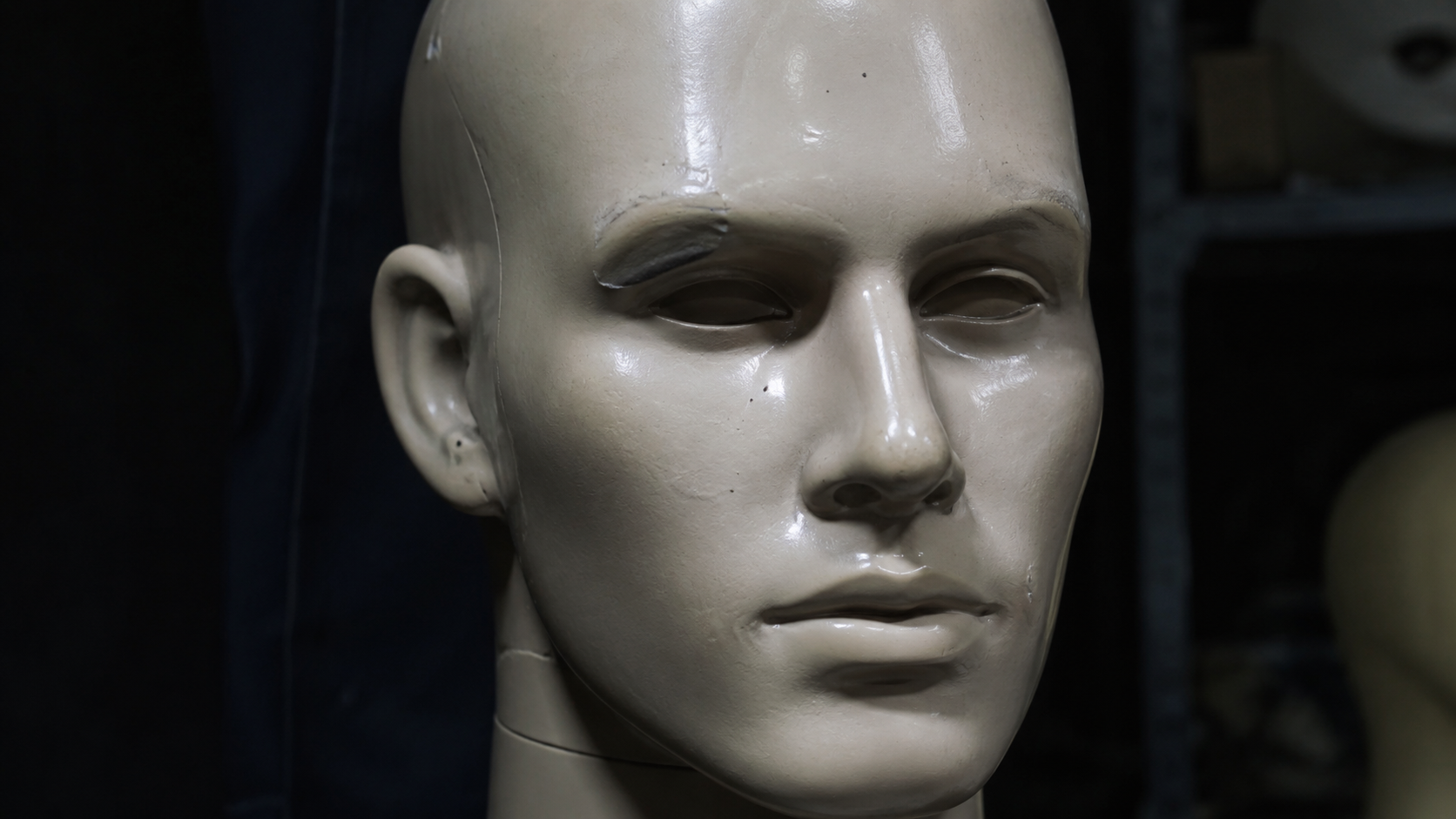
SPECIMEN IMAGE #16:9 - CLEAN OPTICS
A waxy plastic mannequin head under harsh studio lights is an ideal test subject for realism calibration because it exposes many of the shortcuts hidden inside default AI aesthetics. Most generated images lean toward polished surfaces, balanced lighting, and generalized visual appeal. In contrast, synthetic materials such as molded plastic reveal whether an image system can accurately reproduce manufacturing artifacts, surface contamination, highlight clipping, and the uncomfortable visual qualities that often exist in real-world photography.
At first glance the scene appears simple, yet nearly every realism layer contains useful film-style information. Below, the subject, environment, physics, time, and camera layers can be separated and examined individually. However, the deeper lesson is not found in the object itself. The true leverage comes from language-level calibration. The lexicon shifts at the end of the dossier reveal how replacing aesthetic vocabulary with observational vocabulary changes the behavior of image generation systems.
The calibration process relies on replacing abstract quality terms with physically measurable descriptions. Instead of asking for cinematic lighting, we specify clipped highlights and dense shadow transitions. Instead of perfect plastic skin, we describe waxy molded material with scratches and uneven gloss retention. These lexicon shifts increase material fidelity, reduce aesthetic bias, improve optical plausibility, and strengthen consistency across subject rendering, environmental interaction, and sensor simulation. The result is not merely a more detailed image, but a more believable one.
This returns us to the original problem: repetitive AI imagery often fails because it describes ideals rather than observations. By structuring prompts through the five layers of reality and applying systematic lexicon shifts, creators can produce outputs that behave more like real photographs and less like visual templates. For a deeper framework covering realism calibration, optical behavior, sensor limitations, and film-style prompt engineering, explore ALPHA REALISM. The complete methodology, extended calibration tables, and advanced reconstruction workflows are available through ALPHA REALISM.
The 5 Layers of Reality Applied
Subject:
Close-up view of a life-sized plastic mannequin head with a wax-like surface finish, molded facial features, visible seam lines around the scalp and neck, slight manufacturing asymmetries, shallow eye sockets, artificial eyelashes absent, glossy synthetic skin showing localized reflections, minor scratches, dust particles, and uneven surface wear from handling.
Environment:
Harsh artificial studio lighting positioned above and slightly off-axis, producing clipped highlights on the forehead, nose, and cheeks, deep shadow transitions around the eye sockets and neck, dark neutral background with limited environmental context, visible light falloff, and uneven specular response across the plastic surface.
Physics:
Specular reflections concentrated on smooth plastic regions, micro-scratches scattering light irregularly, gravity-driven dust accumulation in recessed areas, hard-edged shadows from concentrated light sources, localized glare, optical bloom around the brightest highlight zones, and subtle reflection contamination from nearby studio equipment.
Time:
Surface wear visible through faint abrasions, accumulated dust in creases, slight discoloration in high-contact areas, manufacturing marks remaining visible, minor texture degradation from age and handling, and evidence of repeated cleaning creating inconsistent gloss levels.
Camera:
85mm equivalent lens perspective, close focusing distance, moderate depth of field, realistic edge softness, slight chromatic aberration near high-contrast contours, low ISO studio capture, clipped highlight retention limits, mild sensor sharpening artifacts, and physically plausible optical rendering without cosmetic enhancement.
The Lexicon Shift Table
| Appearance (Dead Adjective) |
|
Living Event (Cause & Effect) |
| perfect plastic skin |
➔ |
waxy molded plastic surface with scratches, dust accumulation, and uneven gloss retention |
| cinematic lighting |
➔ |
harsh directional studio lamps producing clipped highlights and dense shadow transitions |
| ultra detailed face |
➔ |
manufactured facial geometry showing molding seams and industrial surface imperfections |
| flawless reflections |
➔ |
localized specular glare interrupted by abrasions and contamination |
| photorealistic mannequin |
➔ |
commercial display mannequin exhibiting material aging and physical wear |
| studio masterpiece |
➔ |
observational product-style documentation of synthetic materials under controlled lighting |
Calibration Prompt Console
SUBJECT: Close-up shot of a life-sized waxy plastic mannequin head, molded facial structure, visible manufacturing seams, shallow eye sockets, synthetic skin sheen, minor scratches, dust particles, uneven gloss retention, industrial display object realism. ENVIRONMENT: Dark studio setting with harsh artificial lighting from above and slightly off-axis, clipped highlights across forehead and cheeks, deep shadows around eye sockets and neck, limited background visibility, observational product-documentation atmosphere. PHYSICS: Hard specular reflections, glare concentration on smooth plastic, light scattering through micro-abrasions, dust settled in recessed regions, realistic shadow density, highlight bloom near peak exposure areas, physically accurate reflective behavior. TIME: Surface aging, handling wear, faint discoloration, cleaning streaks, accumulated dust, subtle material fatigue, evidence of repeated commercial use. CAMERA: 85mm equivalent lens, close focusing distance, moderate depth of field, slight chromatic aberration, realistic optical softness near frame edges, restrained sensor sharpening, clipped highlight behavior, camera-grade realism, non-cinematic rendering, documentary material study --ar 16:9
Do you want to generate precise AI images?
Unlock our alpha realism blueprint, physical reliable framework to get the best of your creations with the ALPHA REALISM Guide.
Download Ebook Now