← BACK TO DOSSIERS LIST
REALISM CASE FILE // TREND: FUJIFILM FILM SIMULATION RECIPES TRANSLATED INTO AI PROMPTS
Film-Style Calibration of Classic Chrome Street Photography: Building Camera-Grade Realism Through Physical Observation
DATE: 2026-07-06
STATUS: CALIBRATED_REALISM
ENGINE: CHATGPT DALL-E 3
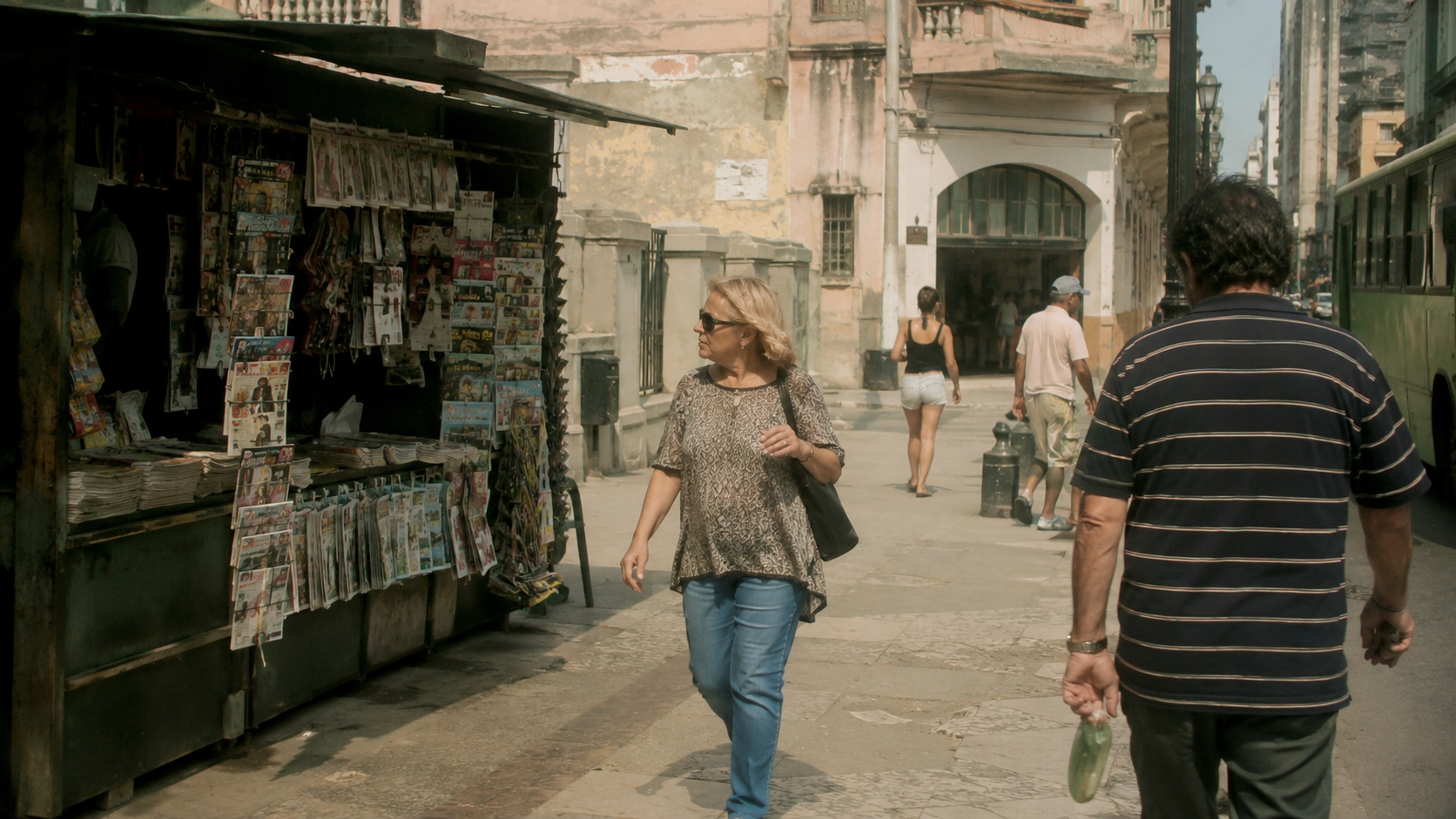
SPECIMEN IMAGE #16:9 - CLEAN OPTICS
Many AI-generated street photographs immediately reveal themselves through repeated visual formulas: immaculate skin, perfectly synchronized pedestrians, exaggerated color separation, and dramatic lighting that rarely exists in everyday urban life. A convincing camera-grade image begins by accepting the ordinary. Documentary realism depends on imperfect timing, physical limitations, environmental disorder, and the subtle compromises introduced by real optics and image sensors.
In the sections above, we have broken the scene into five physical layers so each visual component can be calibrated independently instead of relying on generic aesthetic keywords. Yet the most important breakthrough does not happen inside the prompt itself. It happens at the language level. The calibration console that follows demonstrates how carefully chosen lexical substitutions reshape the statistical expectations of an image model, replacing synthetic defaults with physically plausible visual behavior.
Each lexicon shift removes abstract artistic terminology and replaces it with measurable photographic observations. Rather than requesting cinematic lighting, the calibration specifies available ambient illumination and realistic highlight behavior. Instead of demanding perfect skin or ultra-sharp rendering, it describes observable texture, optical falloff, restrained sensor processing, and environmental interaction. These language-level calibrations encourage models to synthesize images that resemble documentary photography because the vocabulary itself reflects real optical, physical, temporal, and environmental constraints.
The same principle that exposes repetitive AI aesthetics also provides the path beyond them. By thinking in layers of reality and disciplined lexical calibration, creators can consistently move toward images that feel observed rather than manufactured. The complete methodology, expanded calibration workflows, and advanced film-style prompt engineering techniques are available inside the ALPHA REALISM Guide. If your goal is to build reliable camera-grade image generation instead of relying on visual luck, the full framework presented in ALPHA REALISM provides the systematic foundation.
The 5 Layers of Reality Applied
Subject:
A candid street scene with ordinary pedestrians moving naturally through the frame, relaxed posture, unscripted expressions, uneven body language, everyday clothing showing realistic wrinkles, slight fabric displacement, natural grooming variations, imperfect attention, and socially believable spacing without performance or stylization.
Environment:
Late afternoon urban street illuminated by warm sunlight carrying a subtle green bias similar to a Classic Chrome color response, soft highlight roll-off, mixed reflected light from pavement and storefronts, weathered building materials, uneven shadows, visual clutter, layered signage, worn textures, practical lighting, and naturally accumulated environmental detail.
Physics:
Gravity shapes clothing folds naturally, gentle wind introduces irregular fabric movement, reflections appear uneven across windows and metallic surfaces, atmospheric haze softens distant contrast, pedestrians create subtle motion variation, localized highlight clipping occurs on reflective objects, and depth transitions remain gradual rather than artificially isolated.
Time:
Buildings display faded paint, scratched surfaces, worn concrete, accumulated dust, mild discoloration, imperfect maintenance, softened fabric colors from repeated wear, slight footwear abrasion, environmental aging, and authentic signs of continuous everyday use without exaggerated decay.
Camera:
Documentary handheld capture using a 35mm equivalent field of view, moderate depth of field, natural edge softness, slight focus inconsistency toward the frame edges, realistic sensor grain, restrained digital sharpening, subtle chromatic aberration, mild HDR compression, gentle compression artifacts, balanced exposure preserving warm greenish color rendering with smooth highlight roll-off characteristic of Classic Chrome.
The Lexicon Shift Table
| Appearance (Dead Adjective) |
|
Living Event (Cause & Effect) |
| perfect skin |
➔ |
skin texture showing subtle pores with naturally uneven tonal variation under ambient daylight |
| cinematic lighting |
➔ |
available afternoon sunlight producing scattered ambient illumination and soft shadow transitions |
| ultra sharp image |
➔ |
locally inconsistent sharpness with gentle edge softness and realistic lens falloff |
| masterpiece composition |
➔ |
observational framing with minor imbalance and spontaneous subject placement |
| vibrant colors |
➔ |
restrained warm palette with a subtle green bias and muted color separation |
| flawless street scene |
➔ |
ordinary urban environment with layered visual clutter, weathered materials, and natural spatial disorder |
| professional portrait |
➔ |
unscripted documentary capture preserving authentic posture and social behavior |
| high dynamic range |
➔ |
soft highlight roll-off with moderate shadow compression and realistic tonal limitation |
Calibration Prompt Console
Layer 1 — Subject: candid documentary street photography featuring ordinary pedestrians with natural posture, asymmetrical body language, unscripted expressions, realistic clothing wrinkles, everyday garments, socially believable interaction, no beauty enhancement, no editorial posing. Layer 2 — Environment: lived-in urban street with weathered architecture, practical storefronts, layered signage, uneven pavement, environmental clutter, warm daylight carrying a subtle greenish cast resembling Classic Chrome film simulation, soft highlight roll-off, naturally mixed color temperatures. Layer 3 — Physics: gravity-driven fabric deformation, light breeze creating irregular cloth movement, subtle reflections on glass and metal, atmospheric haze reducing distant contrast, physically plausible shadow behavior, localized highlight clipping on reflective surfaces. Layer 4 — Time: faded paint, worn concrete, accumulated dust, minor scratches, repeated material wear, softened clothing colors, authentic environmental aging without exaggeration. Layer 5 — Camera: handheld documentary photography, 35mm equivalent perspective, moderate depth of field, natural edge softness, slight focus inconsistency, restrained sensor grain, mild chromatic aberration, subtle HDR processing, realistic compression artifacts, observational realism, non-editorial rendering, aspect ratio --ar 16:9
Do you want to generate precise AI images?
Unlock our alpha realism blueprint, physical reliable framework to get the best of your creations with the ALPHA REALISM Guide.
Download Ebook Now