← BACK TO DOSSIERS LIST
REALISM CASE FILE // TREND: PROMPTING ANALOG FILM GRAIN AND CHROMATIC ABERRATION IN CHATGPT
Photo-Realism Calibration: Reconstructing an Old Analog Snapshot of a Vintage Car Without Default AI Aesthetics
DATE: 2026-07-27
STATUS: CALIBRATED_REALISM
ENGINE: CHATGPT DALL-E 3
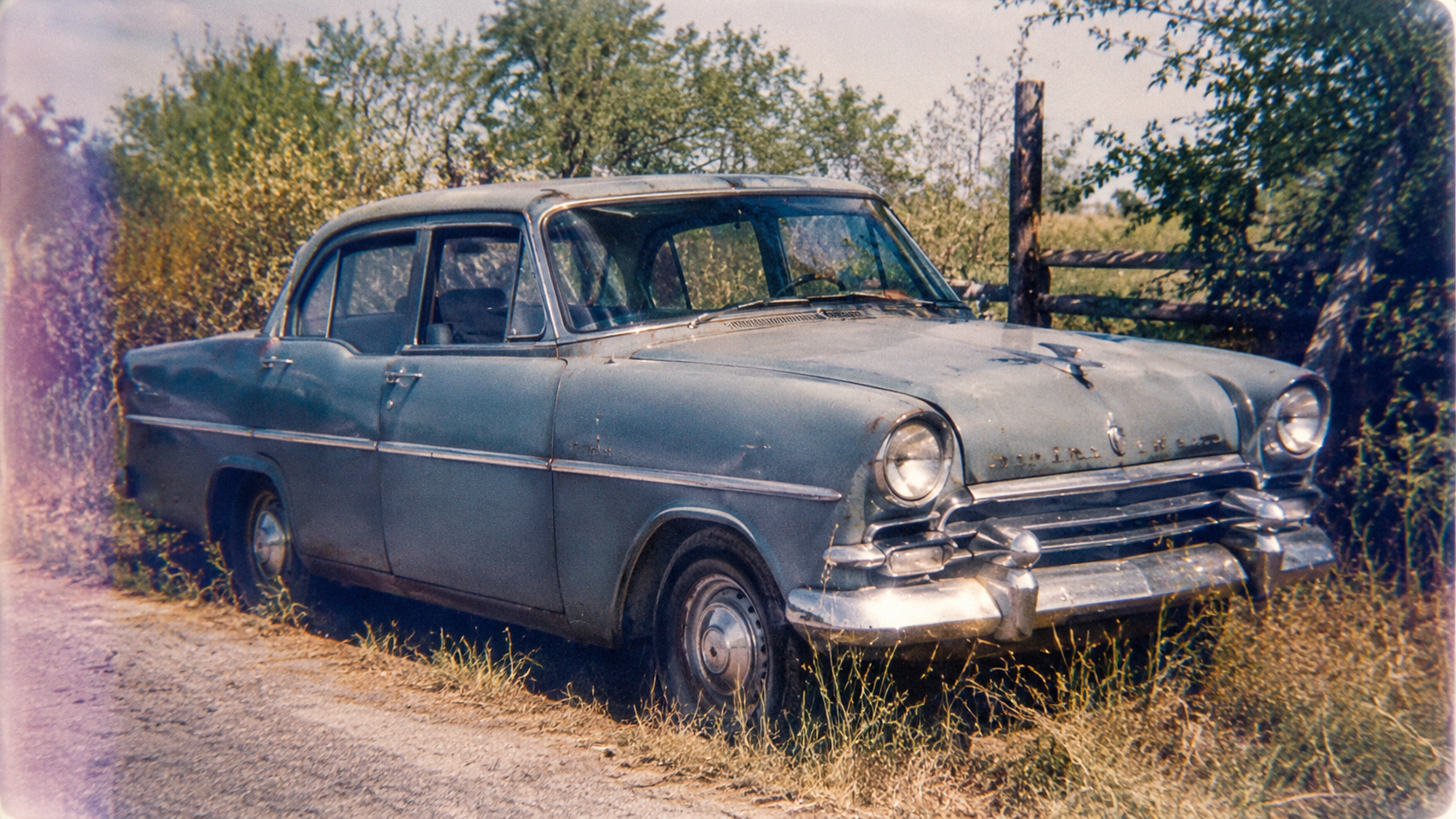
SPECIMEN IMAGE #16:9 - CLEAN OPTICS
Many AI-generated images of vintage cars look strangely similar because they inherit the same visual shortcuts: flawless paint, dramatic lighting, exaggerated sharpness, and highly curated environments. Real analog snapshots rarely behave this way. A genuine photograph of an older vehicle parked by the road contains small imperfections, uneven exposure decisions, film grain, optical limitations, and signs of environmental wear that collectively communicate authenticity.
To understand why this matters, we need to break the image down into physical layers rather than aesthetic labels. The vehicle itself, the surrounding environment, the forces acting on the scene, the evidence of time, and the recording characteristics of the camera all contribute to realism. Yet the deeper lesson goes beyond visible details. The true secret to camera-grade simulation emerges from language-level substitutions that alter how a model interprets reality. Those substitutions become visible in the calibration console through deliberate lexicon shifts.
Lexicon shifts replace generalized visual instructions with physically observable descriptions. Instead of requesting perfection, calibration emphasizes aging, asymmetry, environmental entropy, optical limitations, and realistic information loss. Technical realism metrics therefore prioritize grain behavior over artificial sharpness, exposure instability over stylized contrast, and material fatigue over decorative detail. This approach creates imagery that behaves more like a captured event than a designed illustration.
When we return to the original problem of repetitive AI aesthetics, the solution becomes clear: realism is often a consequence of controlled imperfection. By learning how subjects, environments, physics, time, and cameras interact, creators can move beyond generic outputs and toward believable visual reconstruction. For a deeper framework, study the ALPHA REALISM methodology and explore the complete calibration system inside ALPHA REALISM, where film-style observation, lexicon engineering, and camera-grade realism are treated as a unified process.
The 5 Layers of Reality Applied
Subject:
A vintage automobile parked on the shoulder of a rural roadside, showing period-correct body proportions, aged paint, minor dents, uneven panel reflections, slightly oxidized chrome trim, weathered tires, and subtle signs of long-term ownership rather than restoration.
Environment:
Late afternoon ambient daylight with uneven illumination across the vehicle body, soft shadow falloff beneath the chassis, mild highlight clipping on reflective metal surfaces, roadside vegetation casting fragmented shadows, and atmospheric brightness variation toward the horizon.
Physics:
Gravity affecting suspension stance, diffuse reflections shifting across curved metal panels, slight wind movement in nearby grass and foliage, realistic dust accumulation along lower body sections, and physically plausible light scattering through the atmosphere and lens elements.
Time:
Faded paint pigments, accumulated road dust, small scratches, weathering around trim edges, aging rubber components, slight discoloration in exposed materials, and visible evidence of long-term environmental exposure rather than recent maintenance.
Camera:
Consumer-grade analog film camera, 50mm-equivalent lens behavior, moderate film grain structure, edge softness, subtle chromatic instability near frame boundaries, slight color distortion toward the corners, mild exposure inconsistency, realistic grain clustering, and scanned print degradation.
The Lexicon Shift Table
| Appearance (Dead Adjective) |
|
Living Event (Cause & Effect) |
| perfect vintage car |
➔ |
vintage car with faded paint, minor dents, and uneven chrome aging |
| cinematic lighting |
➔ |
available daylight with soft shadow variation and imperfect exposure balance |
| ultra sharp detail |
➔ |
film-scanned detail with grain interference and edge softness |
| pristine roadside scene |
➔ |
roadside environment with dust accumulation, irregular vegetation growth, and natural visual clutter |
| professional color grading |
➔ |
aged film color response with subtle corner distortion and tonal inconsistency |
| flawless composition |
➔ |
casual snapshot framing with observational positioning and slight imbalance |
Calibration Prompt Console
SUBJECT: An old vintage automobile parked beside a rural roadside, preserving realistic body proportions, faded paint, oxidized chrome trim, minor dents, worn tires, subtle dust accumulation, and signs of long-term use. ENVIRONMENT: Documentary roadside setting with uneven vegetation growth, natural environmental clutter, fragmented shadows from nearby foliage, uncontrolled daylight illumination, and ordinary observational framing. PHYSICS: Realistic reflections across curved metal surfaces, gravity-dependent vehicle stance, light atmospheric scattering, wind influence on surrounding grass, and physically plausible surface aging. TIME: Visible weathering, paint fading, dust deposits, material fatigue, surface scratches, discoloration, and environmental wear accumulated over years. CAMERA: Old analog snapshot aesthetic, consumer film camera rendering, visible film grain, edge softness, slight chromatic instability, color distortion near image borders, mild scan degradation, imperfect exposure balance, authentic optical limitations, non-cinematic documentary realism, realistic analog capture behavior --ar 16:9
Do you want to generate precise AI images?
Unlock our alpha realism blueprint, physical reliable framework to get the best of your creations with the ALPHA REALISM Guide.
Download Ebook Now