← BACK TO DOSSIERS LIST
REALISM CASE FILE // TREND: HOW TO PROMPT REALISTIC HAND DETAILS AND NATURAL FINGERS
Photo-Realism Study: Aging Ceramic Cup and Human Hand Detail in Camera-Grade Image Creation
DATE: 2026-07-21
STATUS: CALIBRATED_REALISM
ENGINE: CHATGPT DALL-E 3
SPECIMEN IMAGE #16:9 - CLEAN OPTICS
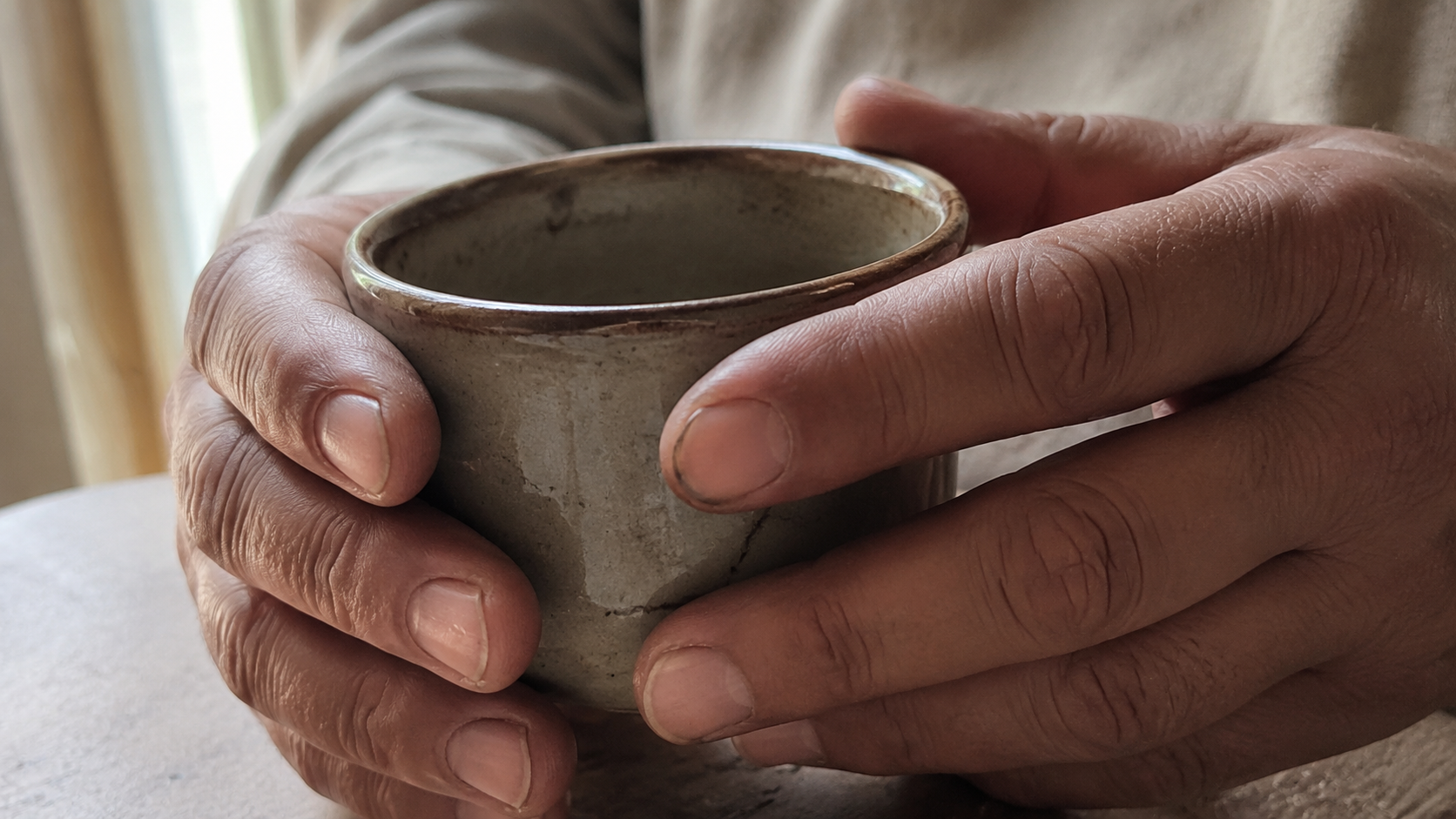
Many AI-generated images still default to the same visual shortcuts: spotless skin, perfect objects, and exaggerated lighting. A close-up of hands holding an old ceramic cup offers a useful counterexample because it depends on details that real cameras observe naturally. The realism emerges from skin compression, material wear, uneven illumination, and the ordinary imperfections that exist in everyday life but are often removed by automated image generation systems.
In this film-style calibration study, we will break down the subject through five layers of reality: Subject, Environment, Physics, Time, and Camera. Each layer contributes observable evidence that increases physical plausibility. However, the true secret behind camera-grade simulation is not merely the accumulation of details. It is the language-level transformation hidden inside the lexicon shift process, where unrealistic visual shortcuts are systematically replaced with observational descriptions. The calibration console at the end of the dossier reveals how these substitutions reshape the final image.
The lexicon shift table functions as a realism control system. Generic phrases such as "perfect skin" or "cinematic lighting" are replaced with measurable visual behaviors such as pore visibility, skin compression, indirect daylight scattering, material aging, and optical limitations. Technical calibration focuses on texture retention, highlight behavior, environmental entropy, focus falloff, and age-related surface changes. When these variables are described precisely, image models begin to simulate the behavior of physical cameras rather than producing idealized visual symbols.
This returns us to the original problem: repetitive AI aesthetics are usually a language problem before they become an image problem. By learning how realism emerges across the five layers and through lexicon-level calibration, creators gain greater control over authenticity and visual credibility. For a deeper framework on film-style image realism, explore ALPHA REALISM. The complete methodology, calibration strategies, and advanced realism workflows are documented in the ALPHA REALISM Guide.
The 5 Layers of Reality Applied
Subject:
Close-up view of two human hands holding an old ceramic cup. Natural skin folds across the knuckles, slight asymmetry in finger positioning, uneven nail lengths, subtle dryness around cuticles, visible tendon definition, localized redness, minor skin texture variation, realistic grip pressure against the cup surface. The ceramic cup shows worn glaze, small scratches, discoloration near the rim, and accumulated age-related imperfections.
Environment:
Indoor setting illuminated by indirect window light. Soft ambient shadows fall between the fingers and beneath the cup. Uneven light distribution creates mild highlight clipping on glossy ceramic areas while preserving shadow depth inside creases and surface recesses. Background remains softly unresolved without artificial studio separation.
Physics:
Gravity influences the downward weight of the cup and creates natural tension in the fingers. Subtle reflections appear along worn ceramic glaze. Skin compresses where fingertips contact the cup. Light scatters across microtexture variations in skin and ceramic. Slight thermal staining and accumulated handling marks contribute to realistic material interaction.
Time:
Visible aging in the ceramic surface through worn edges, faded glaze regions, fine scratches, and accumulated discoloration. Hands show ordinary signs of daily use including mild dryness, uneven skin texture, faint wrinkles around joints, and naturally worn fingernails. Dust traces and age-related material fatigue remain visible rather than cleaned away.
Camera:
Documentary-style close-up captured with a consumer-grade smartphone lens equivalent to 50mm full-frame field of view. Slight edge softness, mild sensor grain, realistic HDR limitations, subtle compression artifacts, imperfect focus falloff, moderate dynamic range, natural tonal transitions, and minor texture loss in darker regions.
The Lexicon Shift Table
| Appearance (Dead Adjective) |
|
Living Event (Cause & Effect) |
| perfect skin |
➔ |
skin texture showing subtle pores, dryness, and natural knuckle folds under window light |
| cinematic lighting |
➔ |
indirect ambient daylight creating uneven illumination and soft shadow transitions |
| pristine ceramic mug |
➔ |
aged ceramic cup with worn glaze, scratches, and discoloration from long-term use |
| flawless hands |
➔ |
hands with asymmetrical finger posture, uneven nail edges, and realistic skin compression |
| ultra sharp detail |
➔ |
localized sharpness with natural optical falloff and sensor-limited texture retention |
| studio quality image |
➔ |
observational close-up with practical lighting and ordinary camera behavior |
Calibration Prompt Console
SUBJECT: close-up of two human hands holding an old ceramic cup, natural skin folds across the knuckles, realistic tendon visibility, uneven fingernail lengths, subtle dryness around cuticles, ordinary human skin texture, asymmetrical finger placement, worn ceramic glaze, scratches, discoloration around the rim, authentic grip pressure. ENVIRONMENT: indoor location illuminated by indirect window light, soft ambient shadows between fingers, uneven exposure distribution, practical daylight behavior, softly unresolved background without staged styling. PHYSICS: gravity-driven hand posture, skin compression where fingers contact ceramic, realistic material reflections, subtle glaze sheen, physically plausible shadow formation, natural light scattering across skin texture and aged ceramic surfaces. TIME: accumulated wear on cup edges, faded glaze, fine scratches, slight dust traces, ordinary signs of use, mild skin fatigue, wrinkle formation around joints, realistic aging behavior without restoration. CAMERA: documentary smartphone photography, 50mm equivalent framing, slight edge softness, mild sensor grain, natural HDR limitations, compression softness, imperfect focus retention, realistic dynamic range, non-cinematic optics, observational realism, avoid beautification, avoid artificial sharpness, avoid luxury styling, preserve authentic imperfections --ar 16:9
Do you want to generate precise AI images?
Unlock our alpha realism blueprint, physical reliable framework to get the best of your creations with the ALPHA REALISM Guide.
Download Ebook Now