← BACK TO DOSSIERS LIST
REALISM CASE FILE // TREND: ALPHA REALISM GUIDE: COMPLETE PROMPT TEMPLATES FOR CREATORS
Camera-Grade Realism: How to Photograph a Photographer Holding a Printed Guidebook Beside a Camera Bag
DATE: 2026-06-27
STATUS: CALIBRATED_REALISM
ENGINE: CHATGPT DALL-E 3
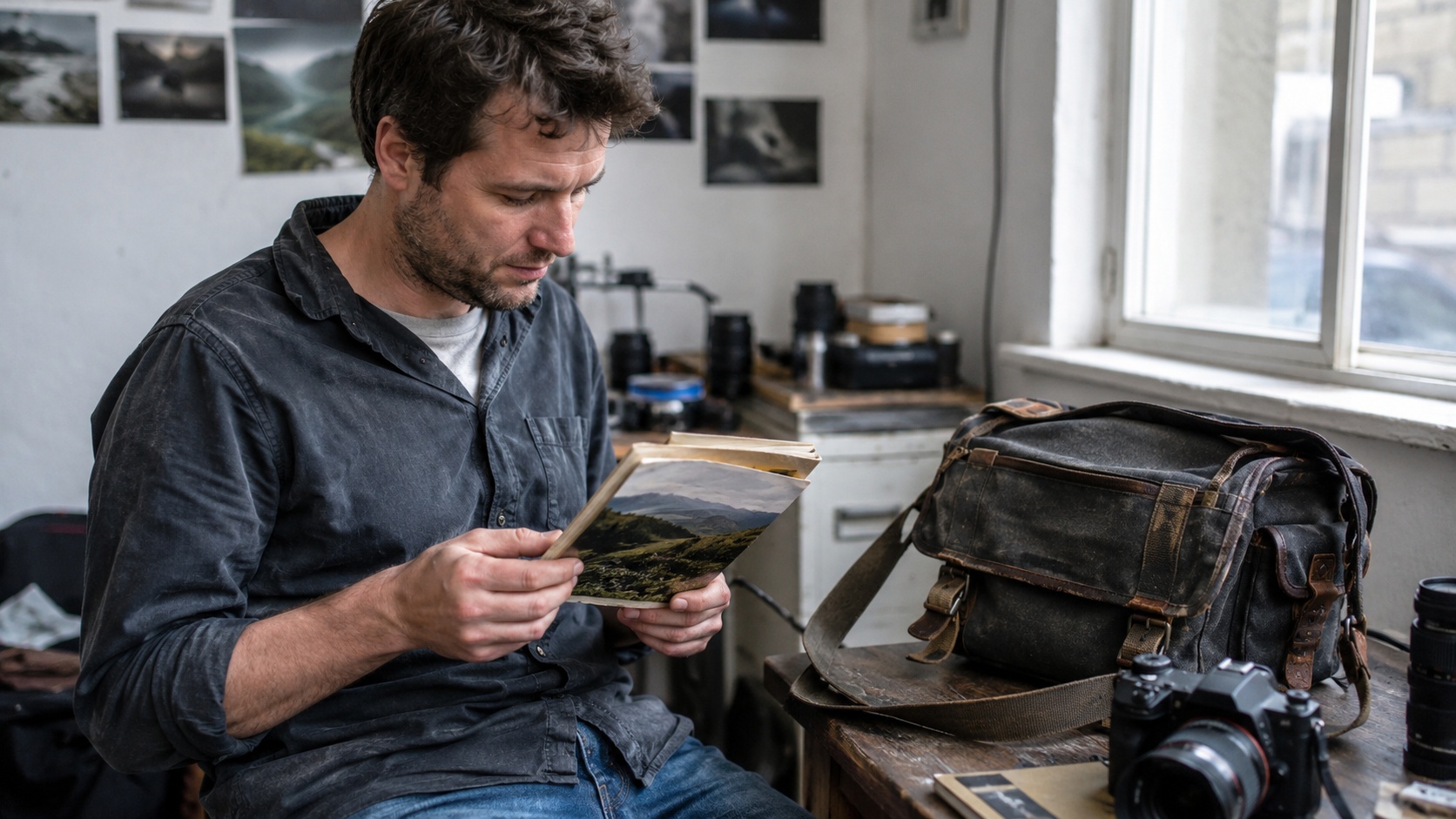
SPECIMEN IMAGE #16:9 - CLEAN OPTICS
Most AI-generated photography still falls into the same visual trap: immaculate lighting, spotless surfaces, flawless materials, and subjects that appear staged instead of observed. A photographer holding a printed guidebook beside a camera bag becomes more convincing when ordinary physical behavior replaces visual perfection, allowing small imperfections, natural wear, and practical lighting to communicate authenticity.
In the sections above, we broke the scene into physical layers that explain why a believable photograph feels grounded rather than artificially polished. Yet the real breakthrough is not hidden in camera settings alone. It comes from subtle language-level substitutions that reshape how an image model interprets reality. Those calibration decisions become fully visible through the lexicon shifts collected in the calibration console at the end of the dossier.
Replacing phrases such as "cinematic lighting" with descriptions of scattered daylight, or exchanging "perfect skin" for realistic skin texture under window light, changes the statistical direction of image generation. Similar shifts applied to clothing wear, optical behavior, environmental disorder, and material aging produce scenes that resemble observational photography rather than synthetic illustration. These calibration metrics prioritize physical plausibility, controlled imperfection, realistic optics, and believable object interaction across all five reality layers.
Returning to the original problem, realism is rarely created by adding more detail—it emerges by describing how the world naturally loses detail, accumulates wear, and behaves under ordinary conditions. If you want to explore a structured calibration workflow for camera-grade prompting, the ALPHA REALISM methodology provides a comprehensive framework, and additional reference material is available through ALPHA REALISM for creators seeking more physically grounded image simulation.
The 5 Layers of Reality Applied
Subject:
An adult photographer stands in a relaxed, non-performative posture while holding a printed guidebook in one hand beside a well-used camera bag. The clothing consists of ordinary casual outdoor wear with naturally formed wrinkles, slight fabric fatigue, and practical footwear. The guidebook shows subtle corner wear and light handling marks. The camera bag has realistic fabric deformation, soft edges from repeated use, slightly worn straps, and small dust accumulation. Facial expression remains neutral and observational rather than posed.
Environment:
The scene takes place in an ordinary indoor workspace or near a window with uncontrolled ambient daylight. Soft indirect illumination mixes with practical indoor lighting, producing uneven facial brightness, gentle shadow transitions, realistic highlight clipping near brighter areas, and naturally darker corners. Background objects remain slightly cluttered with practical photographic accessories arranged without visual symmetry.
Physics:
Gravity affects the hanging camera bag strap and creates natural fabric tension in the subject's clothing. The printed guidebook bends slightly under its own weight while fingers create localized pressure deformation. Small reflections appear on plastic buckles and camera hardware. Minor airborne dust, subtle surface wear, and naturally uneven object spacing reinforce physical plausibility without theatrical effects.
Time:
Visible signs of repeated use include softened bag fabric, faint scratches on plastic hardware, gently faded textile areas, compressed shoulder padding, light dust accumulation, mildly curled guidebook page corners, and small crease lines from frequent handling. Clothing shows realistic wrinkle retention and everyday wear rather than pristine presentation.
Camera:
Simulate an ordinary full-frame mirrorless camera with a 35mm prime lens at approximately f/4, ISO 400, 1/160 second, daylight white balance. Preserve realistic sensor grain, slight edge softness, modest lens microcontrast, natural highlight roll-off, subtle chromatic aberration near high-contrast edges, mild handheld framing variation, and restrained sharpening without cinematic processing.
The Lexicon Shift Table
| Appearance (Dead Adjective) |
|
Living Event (Cause & Effect) |
| perfect skin |
➔ |
skin texture showing subtle pores under window light |
| cinematic lighting |
➔ |
scattered ambient daylight mixed with practical indoor illumination |
| pristine camera bag |
➔ |
camera bag showing softened fabric, worn straps, and accumulated handling marks |
| perfect composition |
➔ |
slightly asymmetrical documentary framing with natural negative space |
| hyper detailed |
➔ |
selective optical sharpness with realistic edge falloff and sensor grain |
| brand-new guidebook |
➔ |
printed guidebook with lightly worn corners, page curvature, and handling creases |
Calibration Prompt Console
Subject Layer: An adult photographer holding a printed guidebook beside a well-used camera bag, relaxed observational posture, neutral expression, ordinary casual clothing with realistic wrinkles, naturally worn footwear, practical accessories, no editorial posing. Environment Layer: Everyday photography workspace near a window with practical ambient daylight, mixed indoor illumination, subtle background clutter including photography equipment, uneven object spacing, naturally imperfect organization. Physics Layer: Gravity-driven strap deformation, realistic fabric tension, guidebook bending under its own weight, localized finger pressure, subtle reflections on camera hardware, dust accumulation, physically plausible material interaction. Time Layer: Camera bag with softened fabric, worn seams, faded textile areas, compressed padding, scratched hardware, guidebook corners showing use, lightly creased pages, clothing exhibiting repeated everyday wear and natural wrinkle retention. Camera Layer: Full-frame mirrorless camera, 35mm lens, f/4, ISO 400, 1/160 second, slight handheld framing variation, realistic sensor grain, natural highlight roll-off, restrained sharpening, subtle chromatic aberration, gentle edge softness, documentary color response, observational realism, no cinematic grading --ar 16:9
Do you want to generate precise AI images?
Unlock our alpha realism blueprint, physical reliable framework to get the best of your creations with the ALPHA REALISM Guide.
Download Ebook Now