← BACK TO DOSSIERS LIST
REALISM CASE FILE // TREND: HOW TO GET THE ALPHA REALISM GUIDE TO SCALE YOUR CONTENT PIPELINE
Camera-Grade Realism for Digital Guidebook Scenes: A Film-Style Calibration Workflow
DATE: 2026-06-29
STATUS: CALIBRATED_REALISM
ENGINE: CHATGPT DALL-E 3
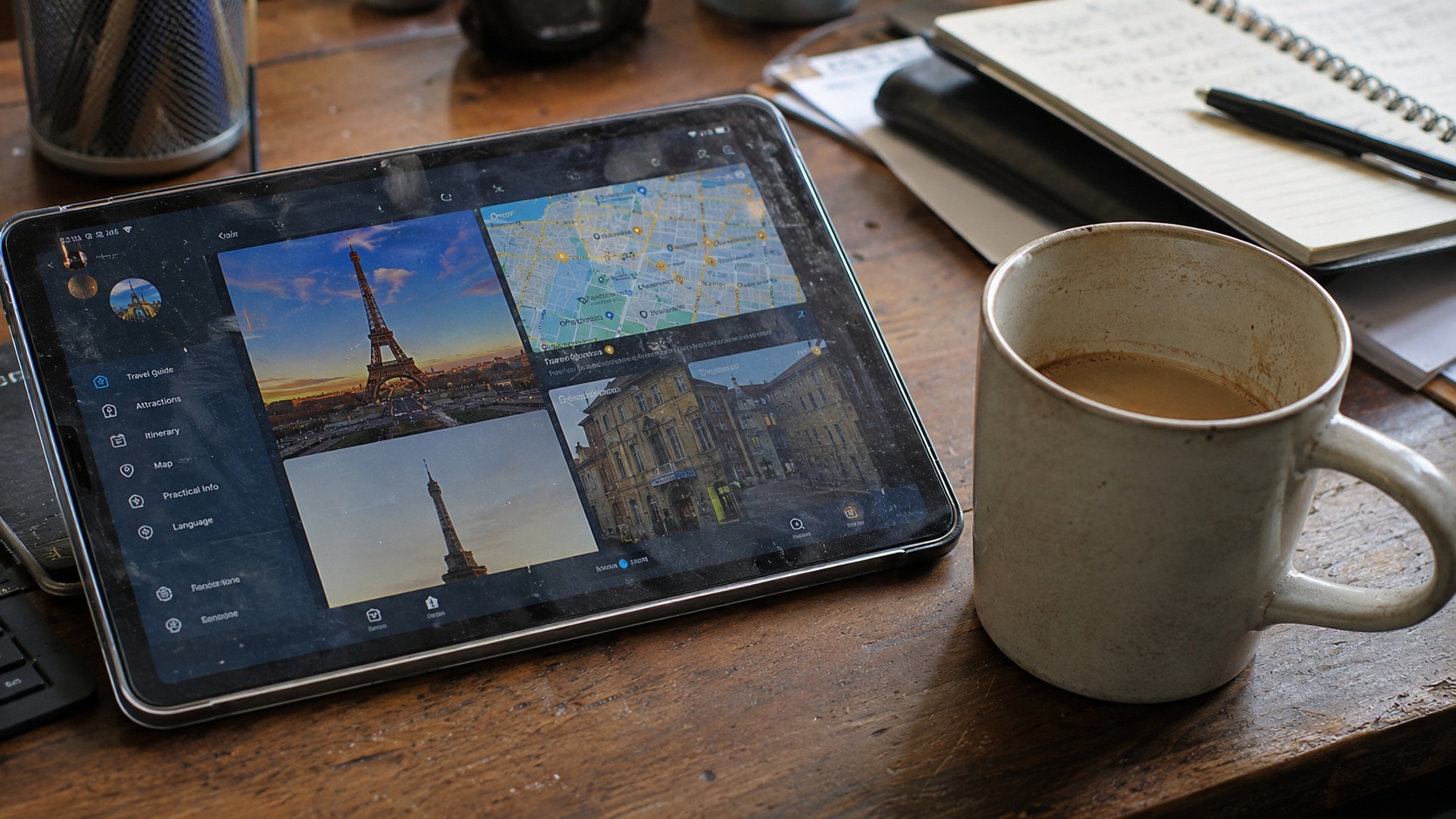
SPECIMEN IMAGE #16:9 - CLEAN OPTICS
Artificial intelligence often defaults to polished product photography whenever it encounters simple desktop scenes. A tablet displaying a digital guidebook beside a coffee mug quickly becomes another spotless composition filled with flawless surfaces, exaggerated sharpness, and cinematic lighting. Real camera captures behave differently because materials accumulate fingerprints, reflections shift unpredictably, and everyday workspaces develop subtle signs of repeated use that make the scene believable.
In this breakdown we will examine those physical characteristics layer by layer, showing how subject structure, environmental behavior, material physics, temporal wear, and camera response combine into a convincing photographic result. Yet the deeper transformation does not come from adding more descriptive words. The real improvement happens through language-level substitutions found in the calibration console, where carefully designed lexicon shifts replace artificial visual shortcuts with physically plausible observations.
Lexicon shifts operate as film-style calibration rather than stylistic decoration. Replacing phrases such as "cinematic lighting" with ambient daylight behavior, or exchanging "perfect product shot" for an ordinary workspace with fingerprints, dust, reflections, and subtle wear, changes how an image model distributes visual evidence across every layer of the frame. These adjustments encourage realistic optics, believable material aging, natural sensor behavior, and more consistent camera-grade image synthesis without relying on exaggerated aesthetic vocabulary.
Returning to the original desktop scene, the difference between a synthetic render and a believable photograph is rarely defined by resolution alone. It is defined by the physical honesty encoded in the prompt. If you want to build prompts using a structured film-style workflow instead of repetitive AI aesthetics, explore the ALPHA REALISM methodology and continue refining your calibration process with the complete ALPHA REALISM Guide.
The 5 Layers of Reality Applied
Subject:
A close-up view of a digital guidebook displayed on a tablet resting on a working desk beside a ceramic coffee mug. The tablet screen shows a structured travel guide with readable headings, small navigation icons, maps, and paragraphs without exaggerated interface styling. Light fingerprints, slight screen smudges, and subtle reflections remain visible. The coffee mug contains partially consumed coffee with a faint residue ring near the inner wall. Nearby objects such as a notebook, pen, charging cable, or folded paper may appear partially cropped, reinforcing an ordinary workspace rather than a staged product scene.
Environment:
Natural daylight enters through a nearby window, producing uneven ambient illumination with soft shadow transitions and mild highlight clipping on glossy surfaces. Reflections vary across the tablet glass depending on viewing angle. The desk surface exhibits realistic wear including tiny scratches, dust particles, slight discoloration, and localized texture variation. Background elements remain softly separated through natural optical behavior rather than artificial blur.
Physics:
Gravity determines the resting position of the mug, tablet, and surrounding objects. Reflections on the tablet glass shift according to the window angle while the ceramic mug produces soft diffuse reflections. Small dust particles settle naturally across horizontal surfaces. Coffee residue follows realistic fluid drying behavior. Minor fingerprints alter reflectivity on the display, and material interactions preserve physically plausible surface responses.
Time:
The workspace shows subtle evidence of regular use including worn desk edges, faint abrasion marks, accumulated dust in corners, slight fading on frequently touched objects, gentle keyboard or notebook wear if present, and naturally aged ceramic glazing. The coffee appears recently consumed rather than freshly poured, suggesting an active working session.
Camera:
Simulated handheld mirrorless or modern smartphone close-up capture using an approximately 35mm equivalent focal length, moderate depth of field, slight edge softness, realistic lens transmission, subtle sensor grain, gentle compression artifacts, restrained sharpening, natural color response, mild highlight roll-off, physically plausible reflections, and documentary-grade optical rendering without artificial cinematic processing.
The Lexicon Shift Table
| Appearance (Dead Adjective) |
|
Living Event (Cause & Effect) |
| perfect product shot |
➔ |
ordinary workspace showing signs of daily use |
| crystal clear tablet screen |
➔ |
tablet glass with faint fingerprints, subtle reflections, and realistic screen glare |
| cinematic lighting |
➔ |
ambient daylight with uneven illumination and soft natural shadows |
| immaculate coffee mug |
➔ |
ceramic mug with subtle coffee residue and normal handling marks |
| spotless desk |
➔ |
desk surface with light dust, tiny scratches, and localized wear |
| ultra sharp details |
➔ |
natural optical sharpness with slight edge softness and realistic sensor rendering |
Calibration Prompt Console
Subject Layer: A close-up documentary-style photograph of a digital guidebook open on a tablet positioned beside a ceramic coffee mug on a working desk, realistic interface layout with travel information, faint fingerprints and subtle smudges on the glass, partially consumed coffee, ordinary office accessories appearing naturally around the frame, no staged luxury styling. Environment Layer: Everyday indoor workspace illuminated by indirect window daylight, uneven ambient illumination, soft shadows, realistic reflections on the tablet screen, lightly worn desk surface with dust particles, scratches and practical object placement, naturally lived-in atmosphere. Physics Layer: Physically accurate reflections, gravity-driven object placement, realistic coffee residue behavior, natural glass glare, diffuse ceramic reflections, subtle surface imperfections, believable material interaction. Time Layer: Gentle signs of repeated daily use including desk abrasion, dust accumulation, light fading, coffee stains, worn edges, realistic environmental aging without exaggeration. Camera Layer: Handheld mirrorless or premium smartphone capture, approximately 35mm equivalent focal length, moderate depth of field, slight edge softness, restrained sharpening, subtle sensor grain, realistic highlight roll-off, mild compression characteristics, documentary photographic realism, non-cinematic color rendering, physically plausible optics --ar 16:9
Do you want to generate precise AI images?
Unlock our alpha realism blueprint, physical reliable framework to get the best of your creations with the ALPHA REALISM Guide.
Download Ebook Now