← BACK TO DOSSIERS LIST
REALISM CASE FILE // TREND: DESK SETUP PROMPTS: HOW TO ADD REALISTIC CLUTTER AND CABLES
How to Build Camera-Grade Realism for an Everyday Workspace Desk Without Falling Into Generic AI Aestics
DATE: 2026-07-10
STATUS: CALIBRATED_REALISM
ENGINE: CHATGPT DALL-E 3
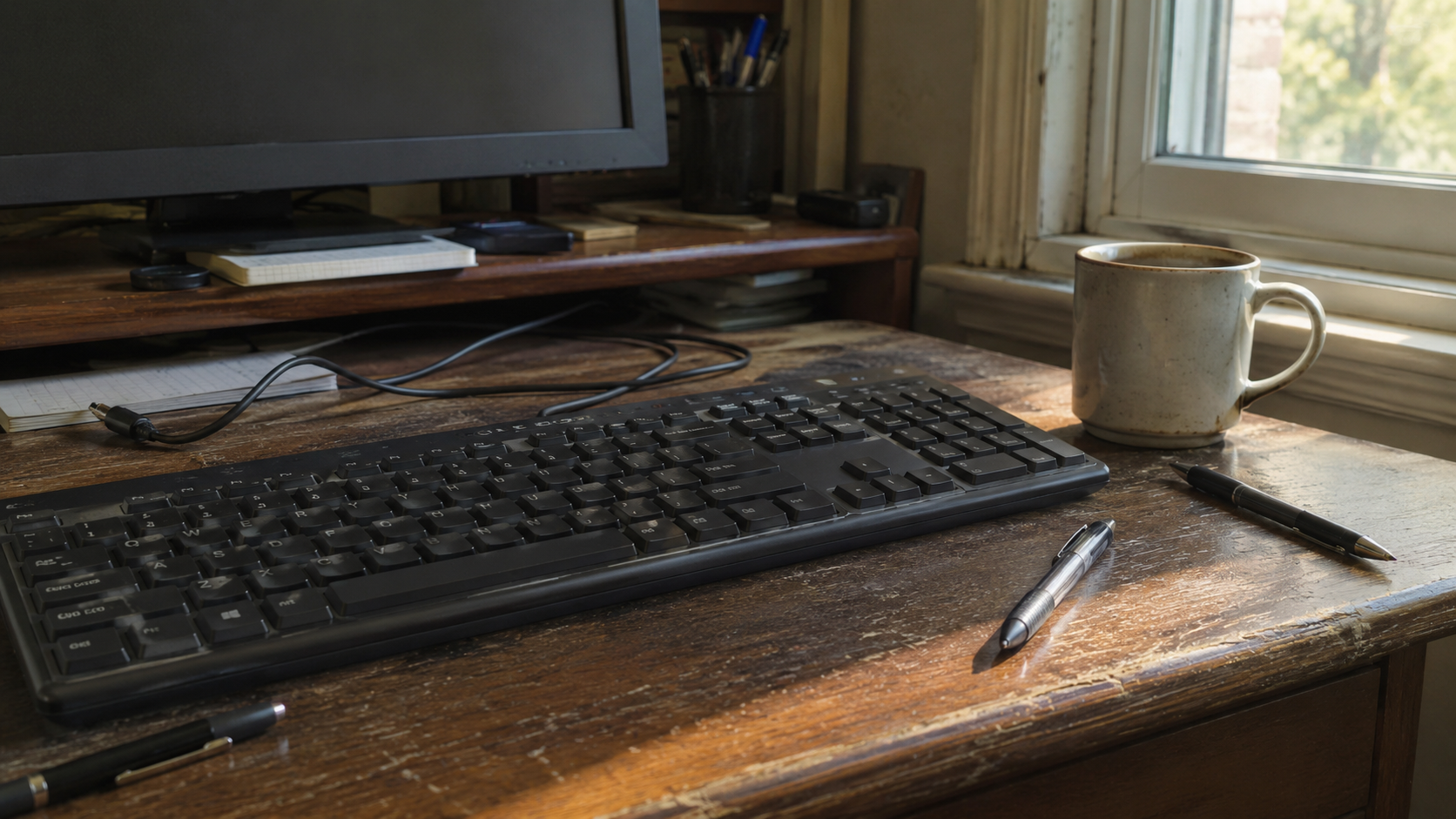
SPECIMEN IMAGE #16:9 - CLEAN OPTICS
Everyday workspaces are among the easiest subjects for AI image generators to oversimplify. The result is often the same spotless desk, perfectly aligned accessories, and exaggerated lighting that resembles product advertising instead of a real photograph. Camera-grade realism begins by accepting that ordinary environments contain imbalance, wear, and small physical inconsistencies that communicate authenticity.
In this breakdown we will move through the physical structure of the scene layer by layer, examining how objects interact with light, gravity, aging, and optics. Those observations matter, but they are only part of the equation. The deeper improvement comes from language itself, where subtle lexical substitutions change how a model interprets reality. The calibration console at the end of the dossier reveals those language-level shifts that separate generic prompts from believable photographic descriptions.
Lexicon shifts replace abstract perfection with observable physical evidence. Instead of describing an image as cinematic or flawless, calibration focuses on measurable behaviors such as uneven daylight, natural material wear, restrained sensor grain, practical object placement, and realistic optical limitations. Each substitution increases physical plausibility while reducing synthetic visual patterns, allowing prompts to better emulate documentary photography rather than idealized rendering.
The same principle that transforms a simple desk scene can be applied across portraits, interiors, products, and documentary environments. Building realism is less about adding adjectives than selecting physically meaningful vocabulary. If you want a deeper calibration framework and a complete methodology for camera-grade prompting, explore ALPHA REALISM and continue expanding your workflow with the complete ALPHA REALISM Guide.
The 5 Layers of Reality Applied
Subject:
A realistic workspace desk with a standard computer keyboard positioned near the front edge, a ceramic mug showing slight everyday use, several pens scattered without deliberate alignment, and a black cable resting loosely behind the keyboard with natural bends and mild tension. Small positional irregularities, fingerprints on frequently touched surfaces, and practical object placement reinforce an ordinary working environment.
Environment:
Natural daylight entering from one side creates uneven illumination with soft shadow transitions, subtle highlight clipping near brighter areas, muted reflections on the keyboard keys and mug, slightly darker corners, and realistic ambient bounce light from nearby walls. The workspace appears lived-in rather than staged, with minor visual clutter and believable spatial organization.
Physics:
Gravity determines the cable curvature and the resting positions of the pens. The ceramic mug casts a soft contact shadow while faint reflections appear across its curved surface. Dust settles unevenly on the desk, slight friction keeps the pens from rolling, and reflected light varies naturally across matte and glossy materials without exaggerated contrast.
Time:
Light dust accumulation, faint scratches on the desktop, subtle shine on frequently used keyboard keys, tiny wear marks around the mug base, minor discoloration from repeated cleaning, and gentle material fatigue communicate long-term everyday use without appearing neglected.
Camera:
Documentary-style digital photograph captured with a consumer mirrorless camera using a 35 mm equivalent focal length at approximately f/5.6, ISO 320, 1/80 s. Slight sensor grain, realistic dynamic range, modest edge softness, subtle lens imperfections, mild compression, and restrained color rendering preserve a believable photographic appearance instead of an idealized render.
The Lexicon Shift Table
| Appearance (Dead Adjective) |
|
Living Event (Cause & Effect) |
| perfect workspace |
➔ |
workspace showing ordinary object placement and practical daily use |
| cinematic lighting |
➔ |
uneven ambient daylight producing soft natural shadows |
| spotless desk |
➔ |
desk with faint dust, light scratches, and subtle signs of routine use |
| perfect cable management |
➔ |
loosely resting black cable following gravity with natural bends |
| hyper detailed render |
➔ |
consumer camera detail with restrained texture retention and slight optical softness |
| studio composition |
➔ |
casual observational framing with realistic spatial imbalance |
| flawless reflections |
➔ |
soft, physically plausible reflections varying by material surface |
| photorealistic masterpiece |
➔ |
documentary-style everyday photograph emphasizing believable physical behavior |
Calibration Prompt Console
Subject Layer: A realistic workspace desk featuring a standard computer keyboard near the front edge, a ceramic mug with subtle everyday wear, scattered pens placed naturally without symmetry, and a black cable lying loosely behind the keyboard with gravity-driven curves and realistic positioning. Environment Layer: Ordinary indoor workspace illuminated by natural window light, uneven ambient illumination, soft shadow transitions, practical object placement, minor desk clutter, muted reflections, realistic material response, lived-in atmosphere without decorative styling. Physics Layer: Gravity affecting cable curvature, contact shadows beneath every object, slight surface dust accumulation, natural friction keeping objects in place, physically plausible reflections on ceramic and plastic, subtle highlight clipping and realistic exposure rolloff. Time Layer: Light scratches on the desk, mild key shine from repeated typing, faint wear on the mug base, accumulated dust in corners, slightly faded surface finish from everyday use, realistic aging without neglect. Camera Layer: Documentary photography, consumer mirrorless camera, 35 mm equivalent lens, f/5.6, ISO 320, shutter speed 1/80 s, restrained dynamic range, subtle sensor grain, slight edge softness, realistic optical imperfections, mild compression, neutral color science, observational realism, no cinematic styling, no artificial perfection --ar 16:9
Do you want to generate precise AI images?
Unlock our alpha realism blueprint, physical reliable framework to get the best of your creations with the ALPHA REALISM Guide.
Download Ebook Now