← BACK TO DOSSIERS LIST
REALISM CASE FILE // TREND: CUSTOM GPT CRUEL RAW REALISM: HOW TO DOUBLE YOUR GENERATION SPEED
Photo-Realism for AI Images: Building a Believable Computer Screen Chat Interface
DATE: 2026-06-29
STATUS: CALIBRATED_REALISM
ENGINE: CHATGPT DALL-E 3
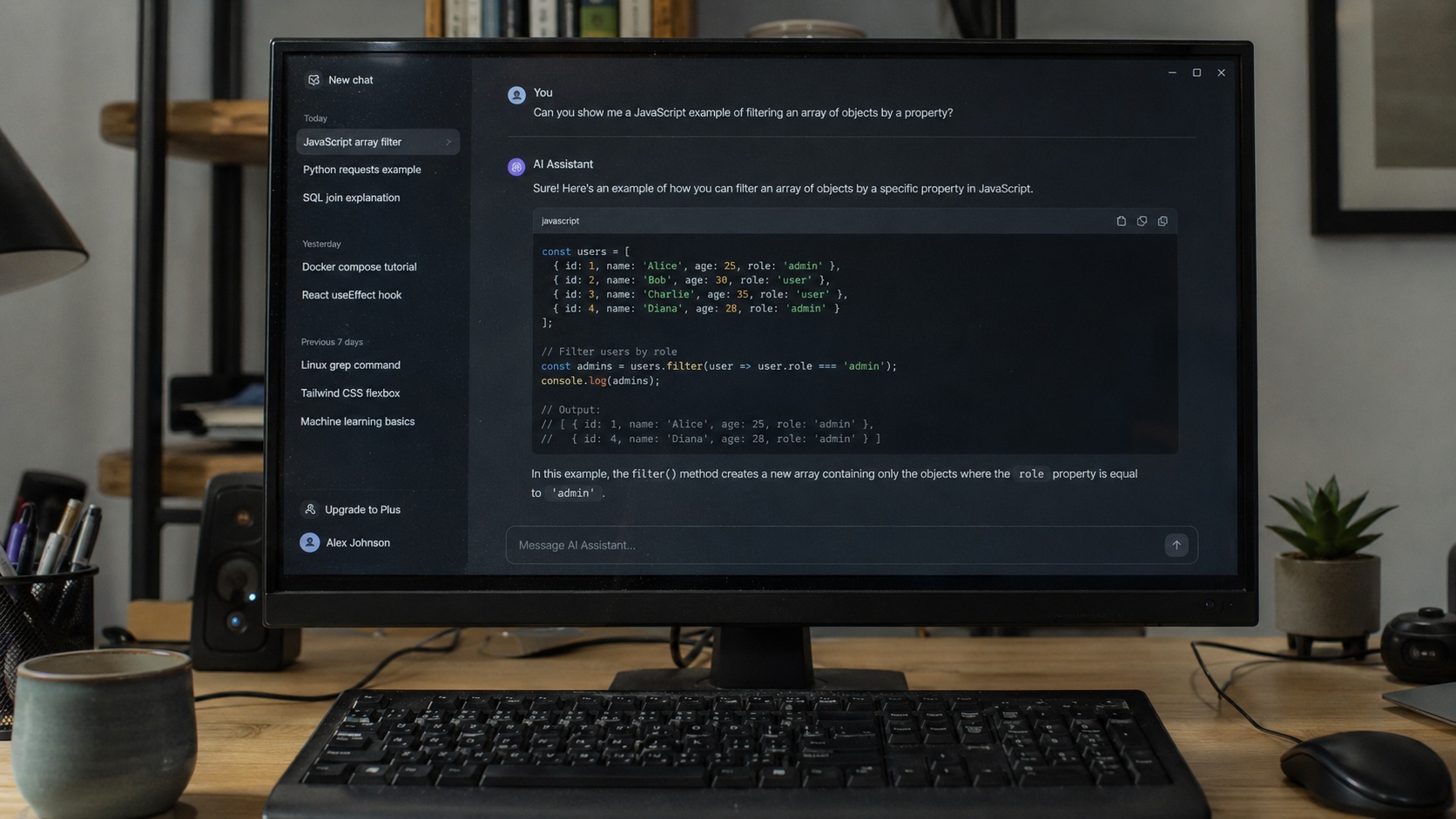
SPECIMEN IMAGE #16:9 - CLEAN OPTICS
Most AI-generated images of computer screens immediately reveal themselves through repetitive visual language. Screens become impossibly clean, reflections disappear, typography feels unnaturally perfect, and every interface looks as though it belongs in a product advertisement rather than on a workstation that someone actually uses. Camera-grade realism begins by replacing idealized assumptions with observable physical behavior.
In the breakdown below, we will examine how authentic display photography emerges from optics, materials, lighting, sensor behavior, and ordinary environmental imperfections. Yet those physical layers are only part of the equation. The larger shift happens in language itself, where small vocabulary changes accumulate into dramatically different visual outcomes. The calibration console at the end of the dossier exposes these language-level transitions that separate generic prompts from physically believable simulations.
A film-style calibration treats every descriptive choice as a measurable variable. Replacing abstract phrases such as "cinematic lighting" with descriptions of mixed ambient illumination, substituting "perfect monitor" with realistic surface wear, and specifying authentic optical effects such as moire, anti-aliasing, and display reflections all reduce synthetic visual signatures. These lexicon shifts encourage models to simulate observable photographic evidence instead of idealized concepts, producing images that resemble documented captures rather than promotional renders.
The same principle that exposes repetitive AI aesthetics also provides the path toward more convincing results. By grounding prompts in measurable physical behavior instead of visual clichés, creators gain far greater control over realism across many subjects. For a deeper methodology covering calibration workflows, layered prompt construction, and film-style language design, explore ALPHA REALISM. The complete framework expands these techniques into a repeatable production process that helps transform descriptive language into camera-grade realism, with additional resources available through ALPHA REALISM.
The 5 Layers of Reality Applied
Subject:
A documentary-style photograph of a desktop computer monitor displaying a modern chat interface with clean paragraphs, readable code blocks, subtle syntax highlighting, realistic UI spacing, visible scroll bar position, minor anti-aliasing on text edges, and naturally rendered display pixels. The monitor frame shows light wear, faint fingerprints, and slight dust accumulation without exaggerated imperfections.
Environment:
An ordinary workspace illuminated by indirect daylight mixed with soft room lighting. Mild reflections from a nearby window appear across portions of the display glass without obscuring the interface. Shadows remain uneven and naturally distributed across the desk, keyboard, monitor bezel, and surrounding objects.
Physics:
Display glass reflects nearby objects according to viewing angle, brightness falls off naturally toward screen edges, dust catches grazing light, cables rest under gravity, the monitor stand supports realistic weight distribution, and subtle LCD viewing-angle shifts produce small brightness differences across the screen.
Time:
The workspace appears regularly used rather than staged. Light dust is visible along the monitor bezel, minor keyboard wear is present, a few faint microfiber cleaning streaks remain on the display, and the desk surface contains subtle signs of daily use without appearing neglected.
Camera:
Eye-level documentary capture using a 50mm equivalent lens, f/4, ISO 400, 1/80 s, neutral white balance, slight sensor grain, modest edge softness, realistic display moire, mild reflection bloom, natural dynamic range, no artificial HDR look, and subtle compression characteristics consistent with a contemporary digital camera.
The Lexicon Shift Table
| Appearance (Dead Adjective) |
|
Living Event (Cause & Effect) |
| perfect monitor |
➔ |
monitor with subtle dust, faint fingerprints and ordinary signs of daily use |
| cinematic lighting |
➔ |
mixed daylight and practical indoor illumination with uneven soft shadows |
| ultra sharp screen |
➔ |
display showing realistic LCD pixel structure, mild moire and natural anti-aliasing |
| pristine workspace |
➔ |
regularly used desk with subtle clutter and believable object placement |
| hyper detailed reflections |
➔ |
soft window reflections following realistic viewing angles and glass behavior |
| perfect UI |
➔ |
clean interface with naturally spaced typography, readable code blocks and authentic screen rendering |
Calibration Prompt Console
Subject Layer: Documentary photograph of a desktop computer monitor displaying a modern AI chat interface with clean readable text, realistic code blocks, subtle syntax highlighting, accurate typography spacing, visible scrollbar position, authentic LCD pixel behavior, minor anti-aliasing, light fingerprints on the glass, faint dust on the bezel, ordinary keyboard, mouse and desk accessories, no exaggerated perfection. Environment Layer: Regular home or office workspace with indirect daylight mixed with practical indoor lighting, soft uneven shadows, realistic reflections on the display glass, naturally arranged desk objects, slight environmental clutter, believable material textures and everyday organization. Physics Layer: Physically accurate screen reflections, realistic brightness falloff across the display, subtle LCD viewing-angle variation, gravity-driven cable placement, mild glass glare, natural reflection intensity, plausible monitor geometry and optical behavior. Time Layer: Light wear on frequently touched surfaces, faint cleaning streaks on the screen, subtle keyboard shine from use, minor dust accumulation, realistic aging of plastics and painted surfaces without neglect. Camera Layer: Eye-level documentary photography, 50mm equivalent lens, f/4, ISO 400, 1/80 second, neutral color science, slight digital sensor grain, modest edge softness, realistic display moire, mild reflection bloom, natural dynamic range, authentic digital capture without cinematic grading or artificial HDR. --ar 16:9
Do you want to generate precise AI images?
Unlock our alpha realism blueprint, physical reliable framework to get the best of your creations with the ALPHA REALISM Guide.
Download Ebook Now